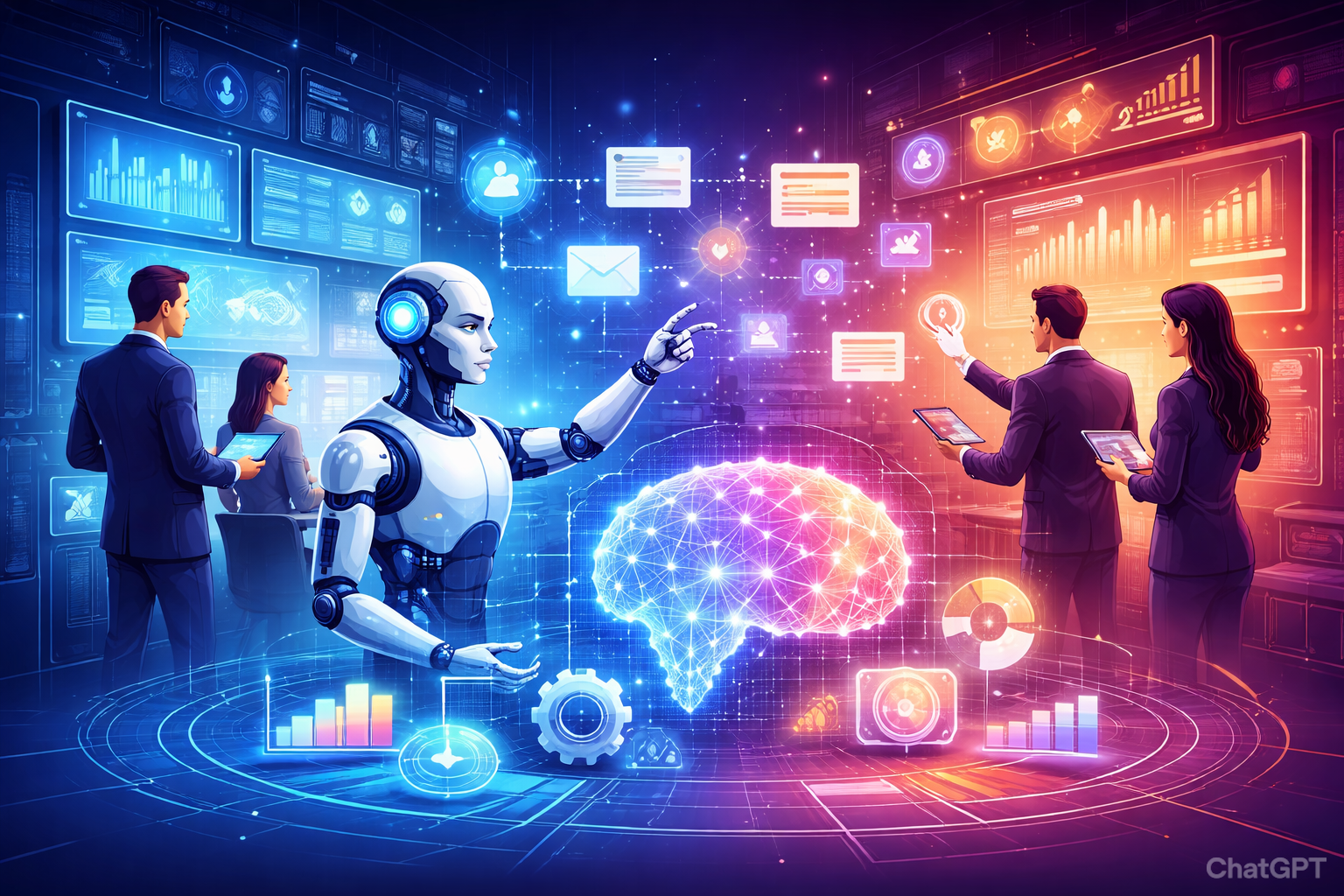
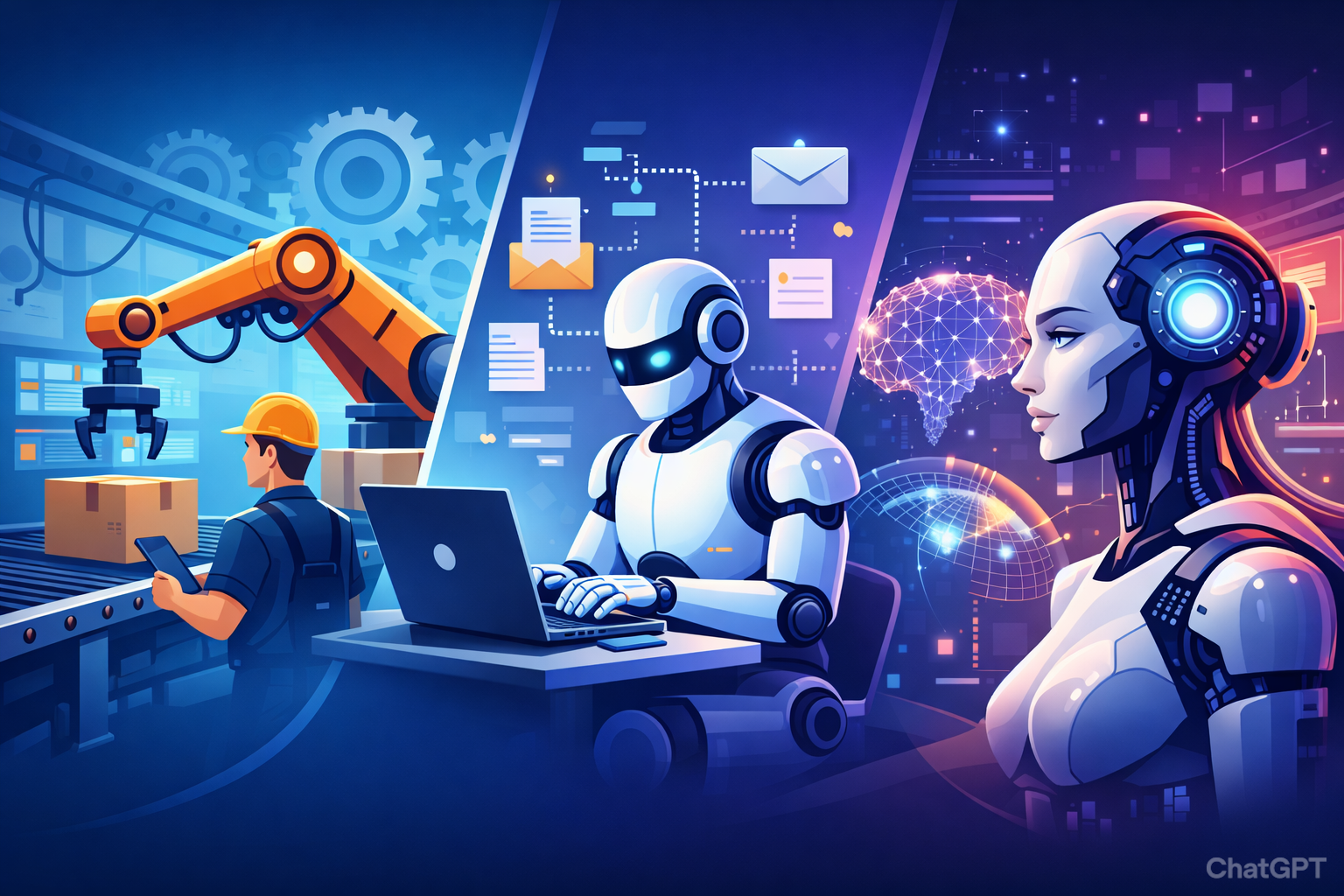
For years, businesses relied on automation software to speed up repetitive tasks and reduce manual effort. From rule-based workflows to basic robotic process automation, traditional automation promised efficiency but often delivered rigidity. In 2025, that model is rapidly becoming outdated. Enterprises now need systems that can think, decide, and act independently. This shift has given rise to Agentic AI, a new generation of intelligent systems that are actively replacing traditional business automation.
Unlike legacy automation tools that follow fixed scripts, Agentic Automation introduces autonomy into business operations. These AI agents do not wait for instructions at every step. They understand goals, assess context, and take action on their own. This evolution is redefining how companies operate, scale, and compete in an increasingly complex digital environment.
The Limitations of Traditional Business Automation
Traditional automation software was designed for predictable environments. It works best when processes are stable, inputs are consistent, and exceptions are rare. However, modern businesses operate in constantly changing conditions. Customer behavior shifts, data sources update in real time, and workflows span multiple platforms and departments.
Rule-based automation struggles in these scenarios. When something unexpected happens, the system breaks or requires human intervention. This leads to delays, inefficiencies, and growing dependence on technical teams to maintain workflows. Instead of freeing employees, traditional automation often adds hidden complexity.
As enterprises grow, these limitations become more visible. Automation that cannot adapt becomes a bottleneck rather than an advantage. This is where Agentic AI changes the equation.
What Makes Agentic AI Different From Automation Software
Agentic AI is not just an upgrade to automation software. It represents a fundamentally different approach. Instead of executing predefined steps, agentic systems operate with intent. They are designed to achieve outcomes rather than follow instructions.
An Agentic AI system can analyze a task, break it into smaller actions, decide the best path forward, and execute those actions across multiple tools. It behaves less like a script and more like a digital worker. This ability to reason and act independently is what sets Agentic Automation apart from traditional solutions.
In 2025, businesses are realizing that automation without intelligence is no longer enough. They need AI that understands context, adapts to change, and works continuously without constant supervision.
Why 2025 Is the Tipping Point for Agentic Automation
Several factors have converged to make 2025 the year Agentic AI takes over. Businesses are handling more data than ever before, yet decision-making needs to be faster and more accurate. Remote and hybrid work models require digital systems that can operate independently across time zones. Customers expect instant responses and personalized experiences.
Traditional automation cannot keep up with these demands. Agentic AI fills this gap by functioning as an autonomous layer across business operations. It can monitor systems in real time, respond to events as they occur, and keep workflows moving even when human teams are offline.
This constant availability is one of the biggest reasons enterprises are moving away from static automation software toward intelligent agentic systems.
How Agentic AI Functions as a True Co-Pilot for Businesses
One of the most powerful ways to understand Agentic AI is to think of it as a co-pilot rather than a tool. Unlike basic AI assistants that wait for prompts, an agentic co-pilot actively participates in work.
It can log into systems, analyze dashboards, generate reports, send emails, update records, and coordinate tasks across platforms. It does not need step-by-step guidance. Once given a goal, it determines how to achieve it.
In enterprise environments, this co-pilot capability reduces cognitive load on employees. Teams no longer need to switch between tools, chase updates, or manually manage workflows. The agentic system handles execution while humans focus on strategy and creativity.
Optix AI and the Rise of Autonomous Digital Workers
Optix AI is a strong example of how agentic systems are evolving beyond traditional automation. Instead of relying on rigid integrations, Optix AI operates using its own computer environment. This allows it to interact with software the same way a human would.
By navigating interfaces, clicking buttons, reading screens, and responding to changes, Optix AI demonstrates the true power of Agentic AI in real business settings. It can perform tasks across legacy systems, cloud platforms, and web applications without requiring complex backend changes.
This approach removes one of the biggest barriers to automation adoption. Businesses no longer need to rebuild their tech stack to benefit from intelligent automation. Agentic systems like Optix AI adapt to existing environments, making deployment faster and more practical.
The Future of Business Automation Is Agentic
Looking ahead, Agentic AI will become the foundation of enterprise operations. It will coordinate workflows, manage systems, and act as an always-on digital workforce. Automation will no longer be about replacing tasks but about achieving outcomes.
Businesses that adopt Agentic Automation in 2025 will gain a significant competitive advantage. They will move faster, adapt more quickly, and operate more efficiently than those relying on outdated tools.
This shift marks the end of automation as we once knew it and the beginning of a smarter, more autonomous future.
Conclusion
Agentic AI is redefining business automation by replacing rigid scripts with intelligent autonomy and real decision-making. In 2025, Agentic Automation will no longer be optional for enterprises that want to scale efficiently and stay competitive. The rise of systems like Optix AI shows how automation software is evolving into true digital co-pilots.
Syncrux is at the forefront of this transformation, delivering advanced Agentic AI solutions for modern enterprises. Their technology empowers businesses to move beyond traditional automation into intelligent execution. With Syncrux, organizations can embrace the future of autonomous operations with confidence.For years, businesses relied on automation software to speed up repetitive tasks and reduce manual effort. From rule-based workflows to basic robotic process automation, traditional automation promised efficiency but often delivered rigidity. In 2025, that model is rapidly becoming outdated. Enterprises now need systems that can think, decide, and act independently. This shift has given rise to Agentic AI, a new generation of intelligent systems that are actively replacing traditional business automation.
Unlike legacy automation tools that follow fixed scripts, Agentic Automation introduces autonomy into business operations. These AI agents do not wait for instructions at every step. They understand goals, assess context, and take action on their own. This evolution is redefining how companies operate, scale, and compete in an increasingly complex digital environment.