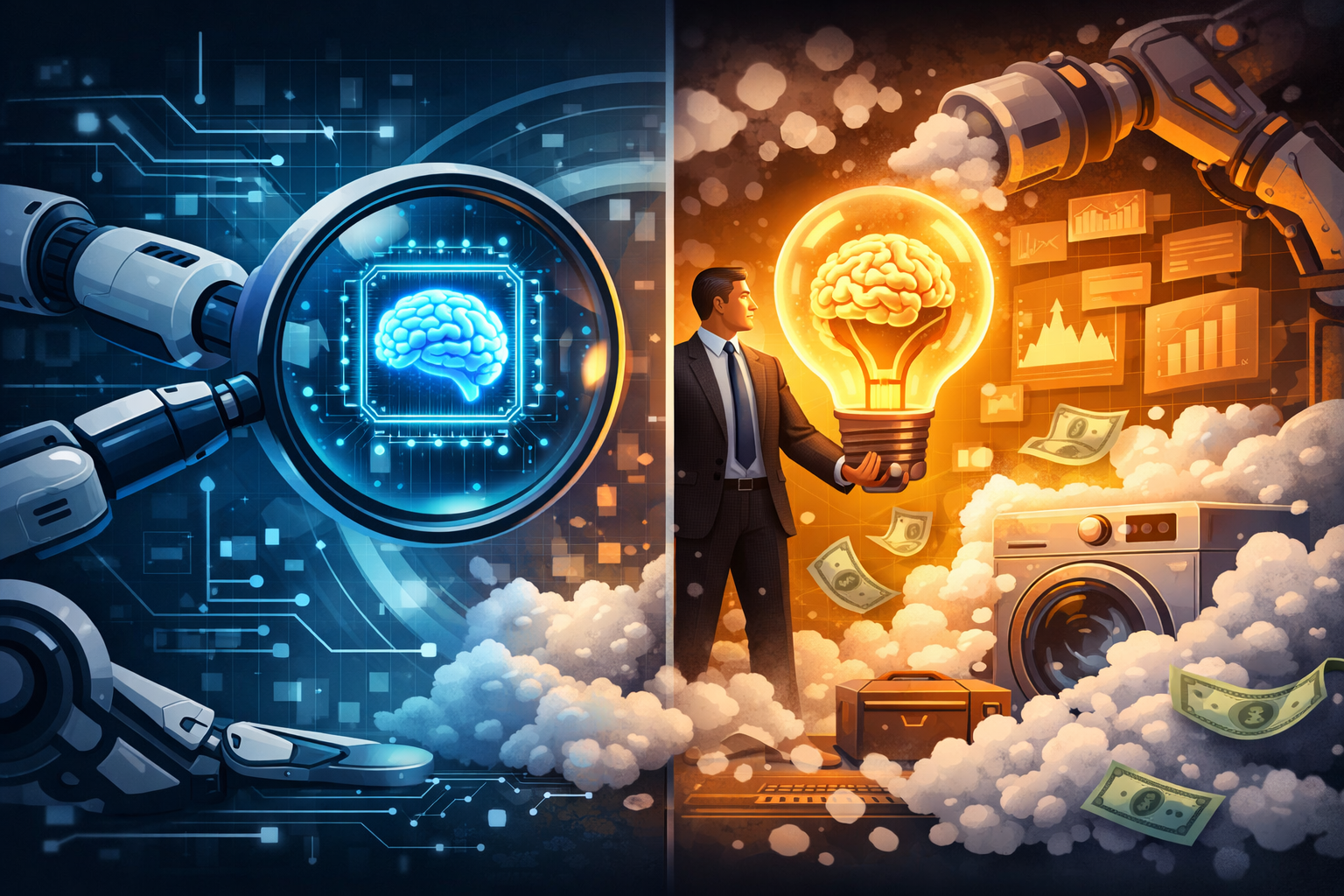
These days, it seems, every company is racing to work with “AI-powered” web solutions for their website or pitch deck. The hype around artificial intelligence is massive, and businesses want in.
But not every claim is legit. That’s where AI washing comes from. It’s basically when companies overstate, stretch, or straight-up fake how much real AI they’re actually using.
It is a practice of exaggerating or misrepresenting AI involvement to look more advanced, innovative, or capable than the reality.
AI greenwashing in the environmental space is deceptive marketing that trades on the excitement (and investor money) flowing toward anything labeled AI.
A company might call a simple rules-based tool or basic automation “AI-driven” or “machine learning-powered” when there’s little to no actual learning, adaptation, or intelligence happening.
We’ve seen plenty of examples over the past couple of years. Amazon’s Just Walk Out stores got called out because reports showed a lot of the “AI” checkout magic relied on people reviewing footage rather than fully automated systems.
Amazon pushed back and clarified its use of computer via vision and sensors. In finance, the SEC fined two investment firms in 2024 after they claimed sophisticated AI algorithms handled trading recommendations. But there was no AI at all.
More recently, cases like Air AI in 2025 drew FTC action for overpromising what their AI tools could do for business owners, leading to big financial losses for customers.
Even “agent washing” popped up as a subset, vendors labeling ordinary chatbots or automation as advanced, autonomous AI agents when they fall far short.
Why Businesses Fall Into It
The incentives are strong. AI is the hottest topic; investors chase it, customers expect it, and competitors are doing it. Some businesses stretch the truth to raise funds or win deals.
Others might genuinely think their basic tool counts as AI because it has a chatbot or pattern matching. Either way, the pressure to keep up with the momentum creates shortcuts.
The Downsides Are Serious
There are several downsides of AI. Business gets caught up in AI washing, which can hurt a business in ways that go beyond a bad headline.
Here’s what tends to happen:
Trust takes a hit: Customers and partners don’t like getting tricked. It takes one viral story about overhyped claims to spread fast online and ruin the reputation of a brand. Once people doubt your tech, it’s tough to rebuild confidence. Hence, brands end up looking gimmicky instead of innovative.
Regulators step in: The FTC and SEC have made this a priority. The SEC has issued fines of $400,000 total from those two advisory firms and warnings about misleading investors in filings. Also, the FTC launched “Operation AI Comply,” and since the launch, they have gone after multiple companies for unsubstantiated claims. These cases sometimes lead to big settlements or a ban on such AI practices. In the EU, the AI Act augments transparency as a necessary requirement, making misrepresentation using AI even costlier.
Legal headaches pile up: Besides the regulators, you are risking a lawsuit from investors claiming securities fraud or deceptive practices. Private suits can drag on and cost far more than any fine.
Investor and funding problems: If you’re pitching or publicly traded, false AI claims can scare off backers or trigger shareholder actions. When the tech doesn’t deliver, valuations drop, and recovery is rough.
Longer-term damage: oftentimes, teams use their time chasing unrealistic promises. When expectations crash, employee morale suffers, and resources shift to fixing PR messes instead of building better products. In the long run, it hurts the whole field. The real AI developers get lumped in with the hype, making everyone more skeptical.
How to Steer Clear
The straightforward way to avoid any trouble is to keep things transparent and specific. If your product uses AI, describe exactly what it does. For instance, “We apply machine learning to analyze patterns in customer data for personalized recommendations.”
It is best to try to prove it with demos and clear explanations. Clients do not like the vague buzzwords, unless they are there to match reality.
What leaders can do is help by building a culture where marketing stays grounded in facts. Also, run the claims through internal reviews before they go live. Third-party audits or transparent documentation build credibility, too.
AI has huge potential when applied genuinely. But the rush to label everything “AI” risks turning it into an empty slogan.
Businesses that focus on real value and clear communication stand out in the noise and avoid the fallout when the hype bubble meets reality.
If you’re evaluating AI tools or building claims around them, the safest bet is simple: under promise and overdeliver. That builds lasting trust in a space where people are getting tired of overblown promises.