Most enterprises are not losing to competitors with bigger teams; they are losing to competitors whose machines decide faster.
That is the uncomfortable truth sitting behind the AI adoption boom of 2024 and 2025. Yes, businesses are investing in AI. But the ones pulling ahead are not just using it to write emails or generate reports.
They have handed over actual decisions: pricing, approvals, fraud detection, inventory, to systems that do not sleep, second-guess, or wait for a Monday morning meeting.
This shift has a name: AI decision automation. And if you run any kind of enterprise operation, you need to understand what it actually looks like in practice, not the vendor pitch version.
How This Is Different From Basic Automation
Old-school automation was simple. You wrote a rule: if X, then Y. It worked well for tasks that never changed. But business conditions change constantly, and rigid rule sets break the moment an edge case shows up.
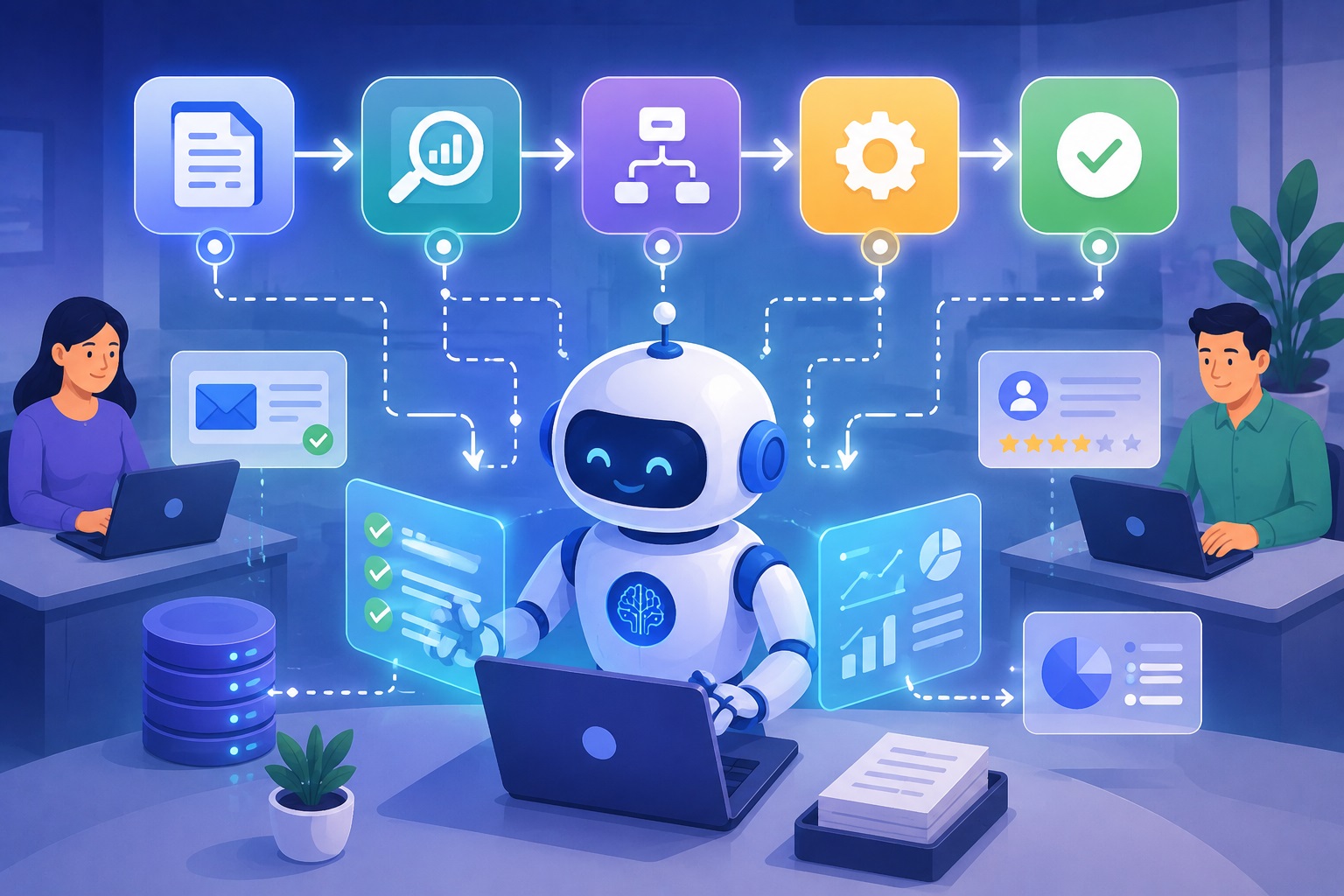
Intelligent business automation works differently. Instead of following a fixed script, it reads context. It weighs dozens of signals at once and adapts its output based on what the data says right now. It doesn’t work on what someone anticipated six months ago when the rule was written.
Walmart’s AI-driven inventory system is a useful example here. It does not just reorder stock when a shelf hits a threshold.
It analyzes sales trends, local demand patterns, weather events, and supply chain signals, then makes autonomous calls on how much to order and where to send it. That kind of real-time, context-aware logic is what separates genuine decision automation from dressed-up rule management.
Where AI-Powered Decision Making Is Already Running
Financial Services: Decisions in Milliseconds
Banks and insurers have been running automated decisions longer than most industries. Fraud detection is the obvious one, systems that assess a transaction in milliseconds, cross-reference behavioral patterns, flag anomalies, and block suspicious activity before it clears.
No analyst needed for tier-one cases.
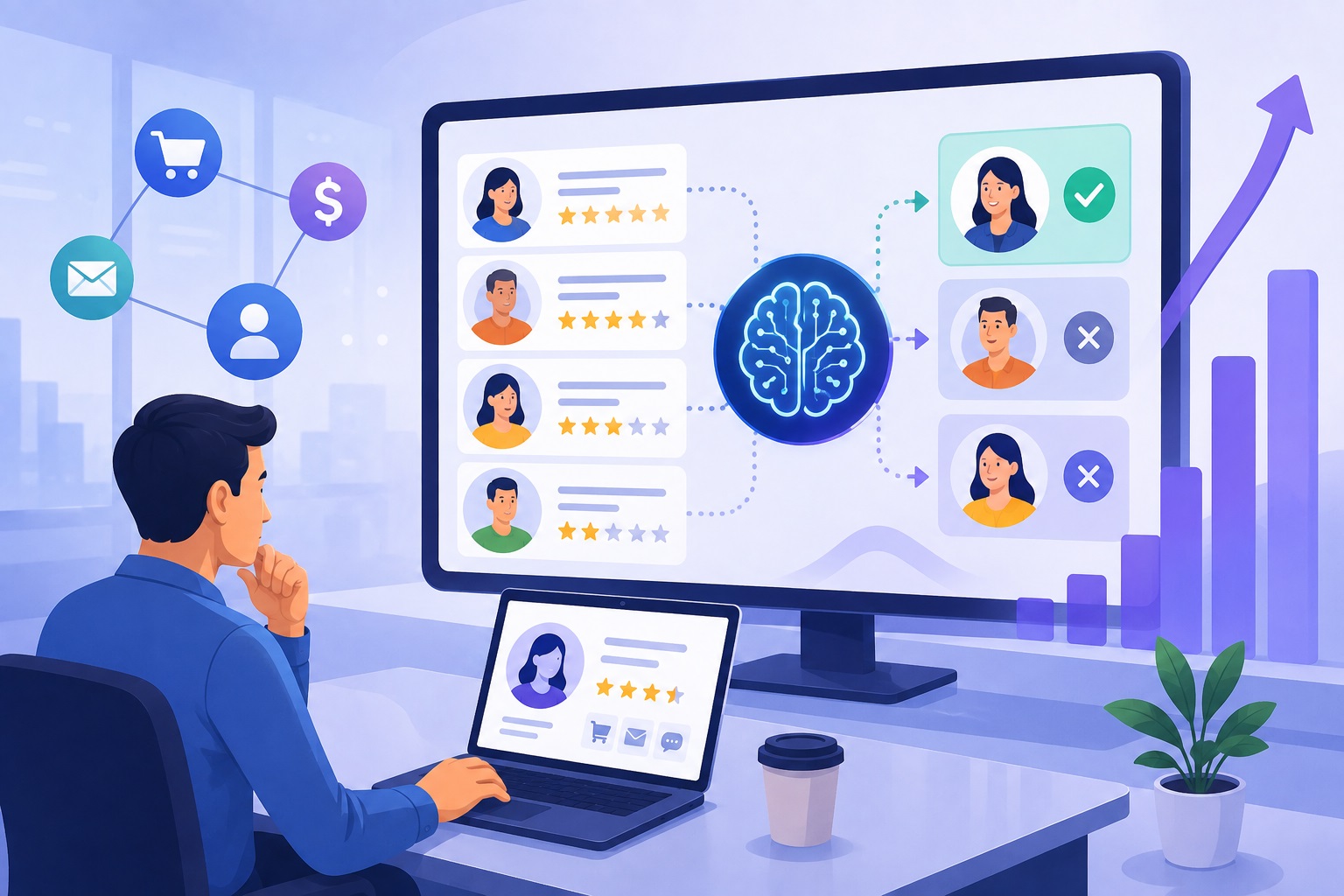
But the scope has expanded well beyond fraud. Credit scoring, loan approvals, regulatory compliance checks, and dynamic pricing on financial products are now areas where AI-powered decision-making runs end-to-end.
The system does not just surface a recommendation; it makes the call.
Healthcare: Catching What Humans Miss
Johns Hopkins developed a system called TREWS. TREWS, or Targeted Real-time Early Warning System, monitors patient records, vital signs, and lab results to flag sepsis risk up to six hours before traditional methods would catch it.
Before AI, sepsis detection accuracy hovered around 20%. TREWS pushed that to 82%, and patients treated through the system are 20% less likely to die from the condition.
That is not a productivity story. That is a life-or-death decision being made better because a machine is faster at reading signals than a human under pressure.
Retail: Pricing That Adjusts by the Hour
Airlines figured out dynamic pricing decades ago. Now that same logic sits in mainstream retail. AI systems adjust prices across thousands of products based on demand signals, competitor movements, and inventory levels, all in real time, without anyone touching a spreadsheet.
The legal tech space is seeing similar gains. Inspira, a legal tech company built on Google Cloud, automated document search, analysis, and drafting using AI.
The result: workflow times dropped by 80%, and lawyers went from waiting weeks for answers to finding them in hours.
The Numbers Behind the Shift
A few data points worth knowing before you write this off as hype:
- The global decision intelligence market was valued at $15.22 billion in 2024 and is projected to hit $36.34 billion by 2030, growing at a CAGR of 15.4%.
- Gartner predicts that by 2025, 95% of decisions that currently use data will be at least partially automated.
- In 2024, the proportion of organizations using AI in at least one business function jumped from 55% to 78% in a single year.
- By 2027, half of all business decisions are expected to be AI-augmented or fully automated.
The growth is not speculative. It is already priced into how enterprises are being built and evaluated.
Enterprise AI Workflows: What Mature Looks Like
There is a gap between companies experimenting with AI and companies whose enterprise AI workflows are actually running in production. From what I have seen, the difference usually comes down to three things.
- First, they have mapped their decisions before automating them. You cannot automate what you have not documented. Only 33% of organizations have integrated workflow and process automation at the team level, and a big part of that gap is that processes were never properly structured to begin with.
- Second, they treat explainability as a hard requirement. In regulated industries, a decision that cannot be explained is a liability. Mature AI automation platforms build audit trails into every decision, including who triggered it, what logic ran, and what data was used. That traceability matters when a regulator asks questions.
- Third, they have humans in the loop at the right points. Not everywhere, that defeats the purpose. But for edge cases, high-stakes calls, or situations the model was not trained on, a human review step is built in by design.
In 2024, 47% of enterprise AI users made at least one major decision based on hallucinated AI content. That number exists because governance was not built into the process from the start.
Honest Challenges No Vendor Highlights
Data quality kills more deployments than any technical limitation. Agentic AI and intelligent automation need clean, structured, accessible data to function well.
Most enterprise data environments are not that. Disorganized knowledge bases and inconsistent data formats are the quiet killers of otherwise solid AI initiatives.
AI automation platforms are not plug-and-play. The vendor demos look seamless. Implementation rarely is. According to MIT research, 95% of enterprise generative AI pilots fail to deliver financial returns.
The failure point is rarely the model; it is the integration work, the change management, and the missing process documentation underneath.
Governance is not optional in 2025. According to UiPath’s 2026 Automation Trends Report, 78% of executives say they will have to reinvent their operating models to capture the full value of agentic AI.
That reinvention includes governance as a foundational layer, not a compliance checkbox bolted on later.
What to Look For in an AI Automation Platform
Not every platform marketed as intelligent is actually built for enterprise decision-making at scale. When evaluating options, these are the things that actually matter:
- Real-time decisioning: Can it process live signals and execute decisions without meaningful lag?
- Business-user control: Can non-technical teams update logic without relying on developers?
- Explainability at the decision level: Can it tell you why a specific call was made, not just what it decided?
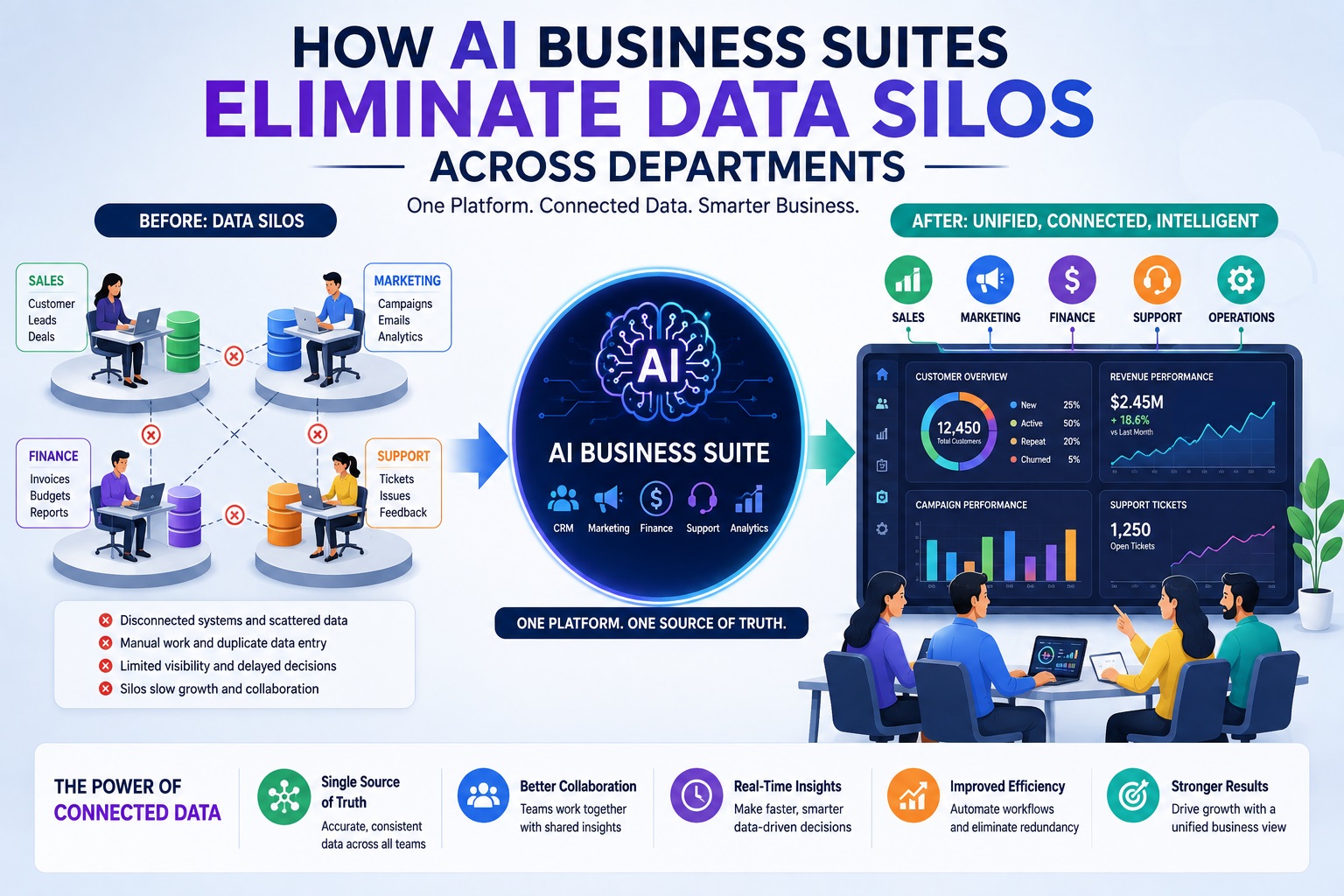
- Integration depth: Does it connect natively with your ERP, CRM, and data systems, or does it sit in a silo?
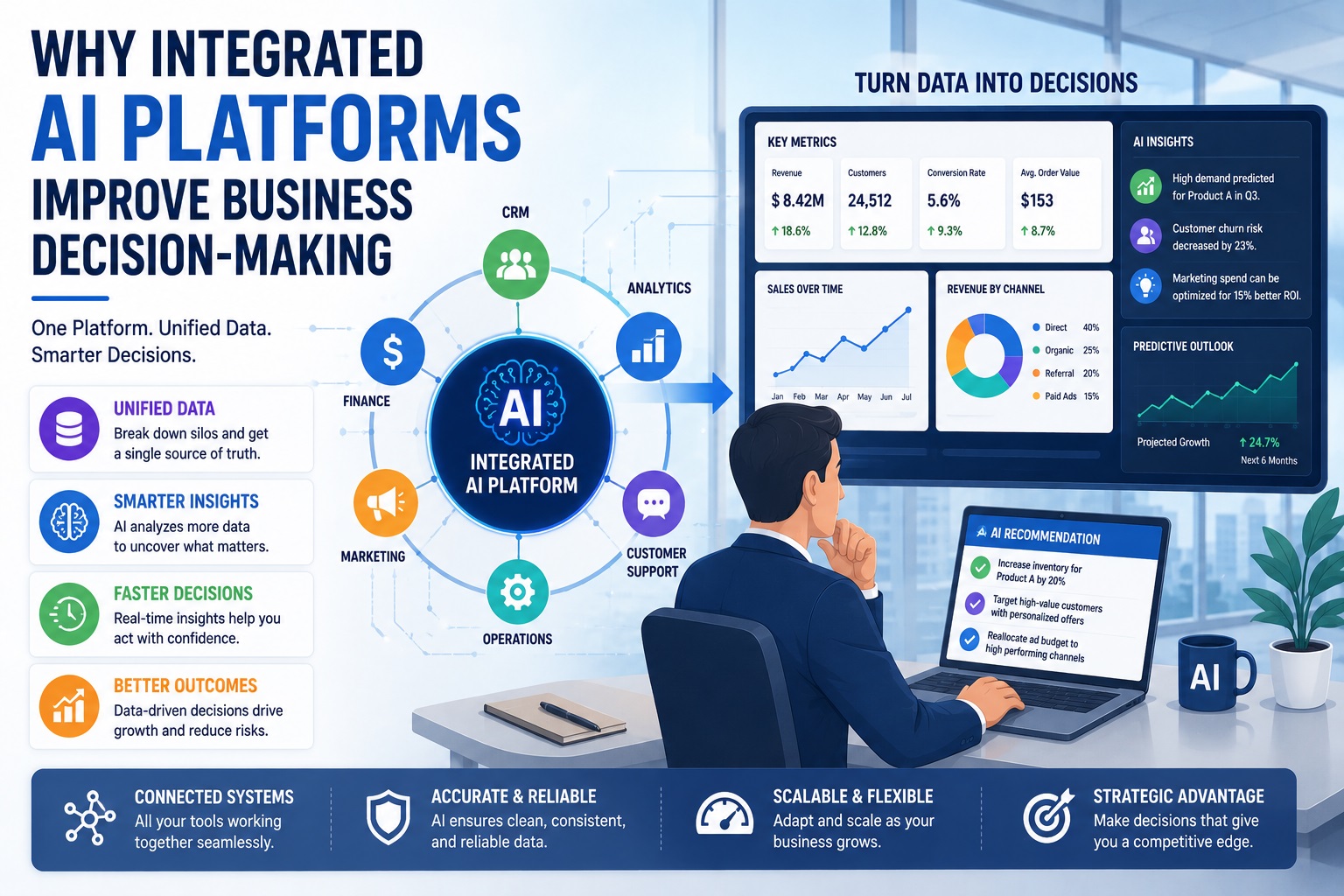
Platforms that converge business rules, machine learning, and generative AI in a single decisioning layer are where the real enterprise value is being unlocked right now. Everything else is partial automation with a better marketing name.
What Smart Enterprises Are Getting Right
The McKinsey 2025 State of AI survey made something clear: the highest-performing AI organizations are not just automating faster; they are redesigning workflows around what AI can actually do.
That is a different mindset entirely.
Instead of asking “how do we use AI to speed up this process?” they ask “if AI owns this decision, what does the process look like?” That reframe changes what gets built and, more importantly, what gets measured.
Autonomous workflow systems built with that logic are not optimizing the old process. They are running a new one.
Conclusion
AI decision automation is not a trend to prepare for; it is the operating model your competitors are running today. The enterprises building real advantage are not waiting for AI to mature further.
They are investing in clean data, mapped processes, governed platforms, and the cultural shift that comes when machines take on decisions that people used to own.
That last part is worth sitting with. When AI handles the routine, high-volume decisions, human judgment gets reserved for the things that actually need it: strategy, exceptions, relationships, and calls that require context a model cannot fully hold.
Done well, that is not a diminishment of human work. It is a reallocation of it toward work that matters more. The companies figuring that out now are building something hard to catch up to
.At Syncrux, we help enterprises move from AI experimentation to AI-powered operations with decision automation frameworks that are built for governance, scale, and real-world complexity.