Nobody plans to end up with a messy tech stack. It just kind of happens. You grab sales & CRM tools to track leads, add an email tool for outreach, pick up something for support tickets, and before you know it, your team is jumping between five different platforms just to get through a normal workday. And half the time, nobody’s even sure which one has the right information.
This is more common than most companies realize, and the costs go well beyond the subscription fees showing up on your credit card each month.
The Real Price Tag of Disconnected Tools
When people think about the cost of their software stack, they usually add up the monthly fees and call it a day. But the actual expense of running multiple disconnected sales & CRM tools shows up in less obvious places.
Time is the biggest one. When your sales team has to manually transfer data between a customer management platform and your outreach tool, that’s time not spent selling. When your support team can’t see the full customer history because it lives in a different system, they spend the first few minutes of every interaction playing catch-up. These small inefficiencies compound quickly across a team of any size.
Data also gets messy when it is spread across too many tools. One person updates a customer’s phone number in the CRM, but the old number is still sitting in the email tool. Someone changes a deal status, but support never sees it. Small gaps like that create confusion fast.
There’s also the cost of training. Every tool your team uses has a learning curve, and onboarding a new employee becomes significantly more complicated when they need to get comfortable with four or five different platforms before they’re fully productive.
What It Does to Your Sales Workflow
Sales workflow software is supposed to remove friction, not add it. But when your pipeline lives in one place, your email sequences in another, and your customer notes somewhere else entirely, your reps end up spending more time managing tools than actually moving deals forward.
Constantly switching between platforms breaks your team’s focus. Every time someone jumps from one system to another, it takes time to get back into the task. Those interruptions add up over the course of the day.
There’s also the issue of visibility. When data is spread across multiple platforms, it’s hard for managers to get a clear picture of what’s actually happening in the pipeline. Reporting becomes a manual exercise that takes hours to compile, and by the time the report is ready, some of the information is already out of date.
The Customer Experience Takes the Hit
All of that internal friction shows up on the customer side in ways that are hard to hide. When your sales rep doesn’t know that the same customer reached out to support last week, the experience feels disjointed. When follow-ups fall through the cracks because the handoff between systems isn’t clean, prospects lose confidence.
Customers interacting with a business today expect the people they talk to have context. They don’t want to repeat themselves. They don’t want to be contacted by sales about a product issue they’ve already reported to support.
These kinds of experiences aren’t just annoying; they erode trust.
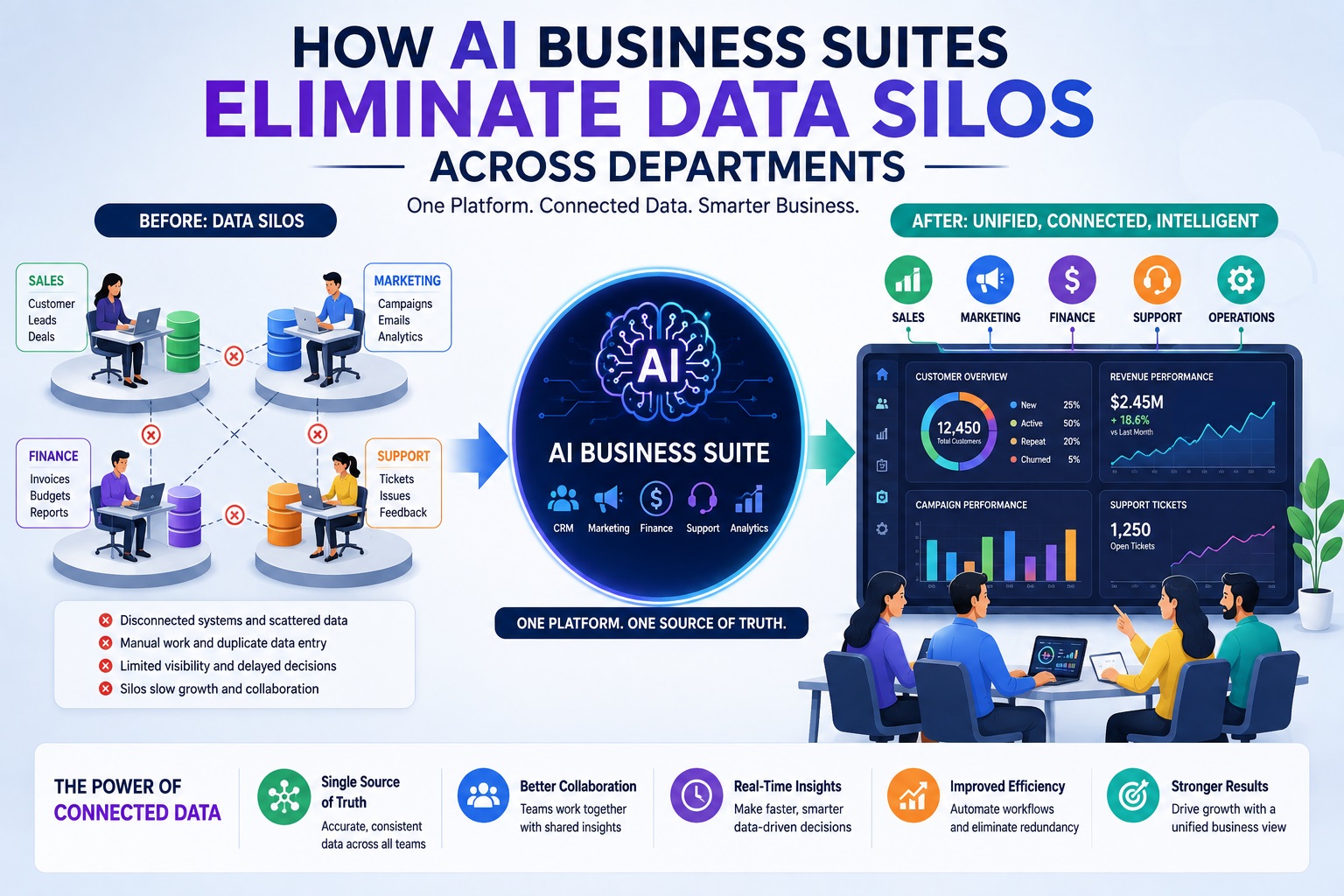
A unified customer management platform solves this by giving everyone on your team a single source of truth. Sales, support, and marketing are all working from the same data, which means the customer experience actually feels consistent.
Why Businesses Are Moving to Integrated Sales & CRM tools
The shift toward integrated CRM software isn’t just a trend; it’s a response to a real operational problem that’s become harder to ignore as businesses scale. When your tools talk to each other, or better yet, when everything lives in one place, the whole operation runs differently.
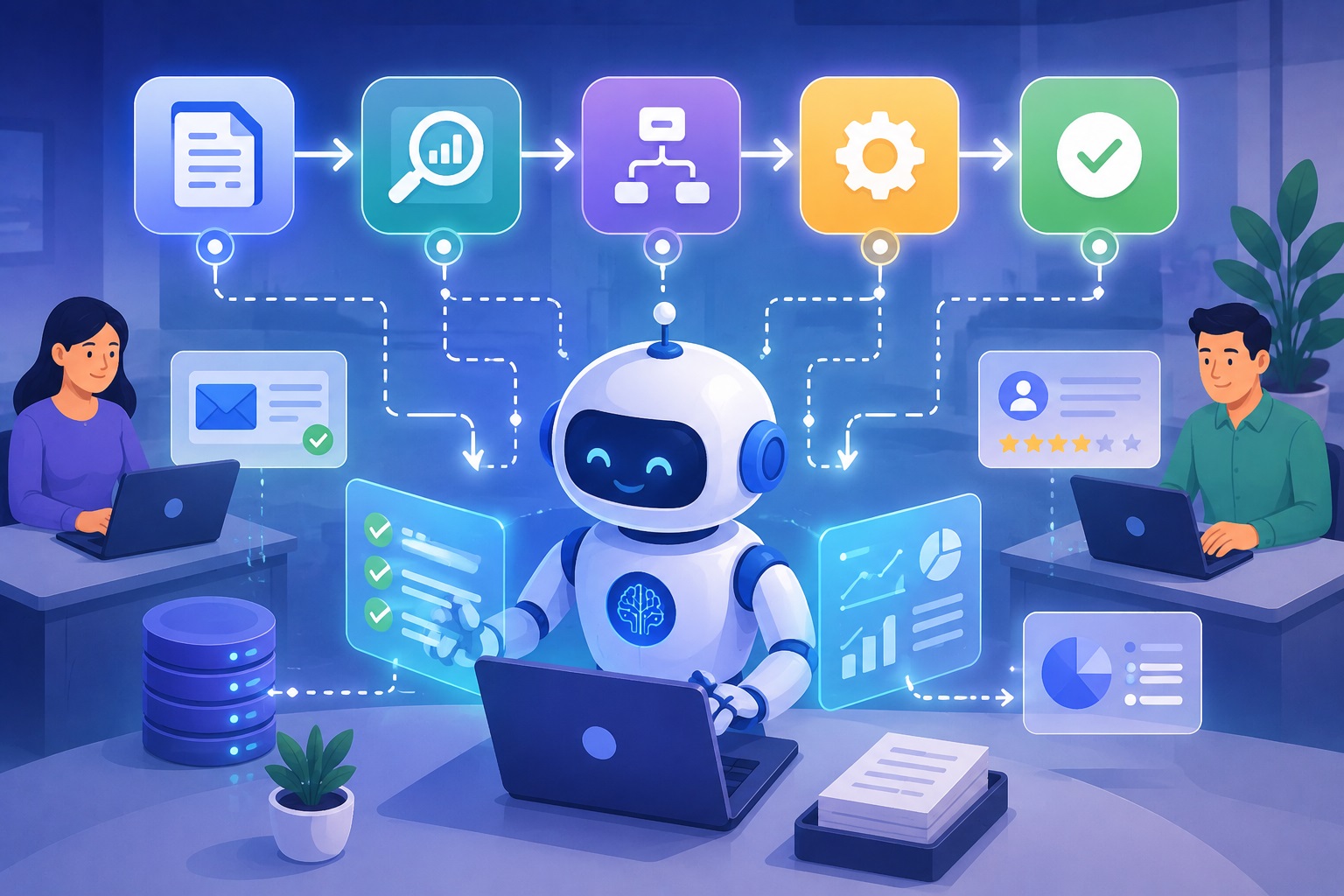
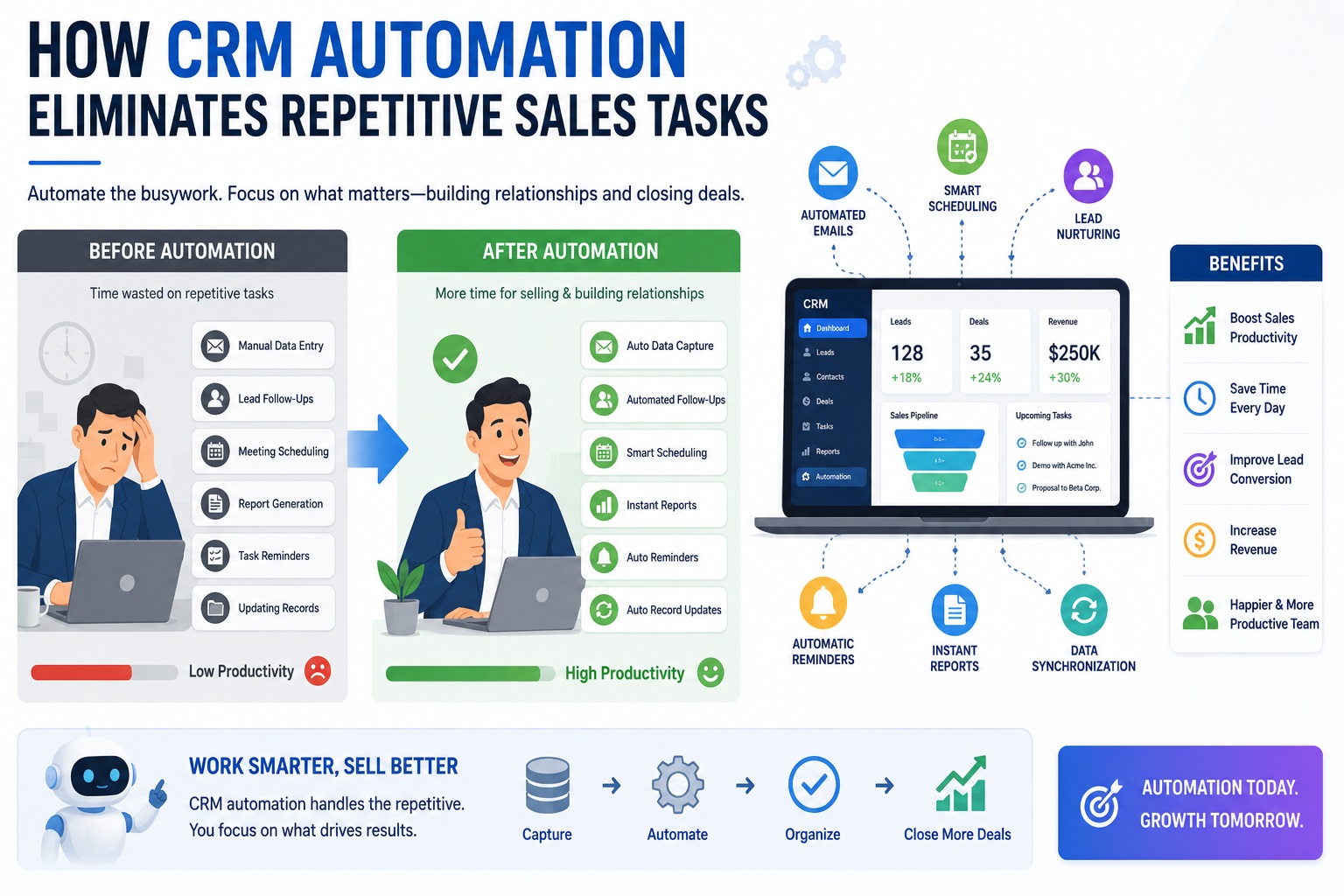
Automation becomes possible in a way it isn’t when your data is siloed. You can build workflows that trigger across the entire customer journey without needing custom integrations or manual workarounds. A lead fills out a form, gets added to a nurture sequence, and if they engage, automatically moves up in the pipeline. If they become a customer, the support team already has their history.
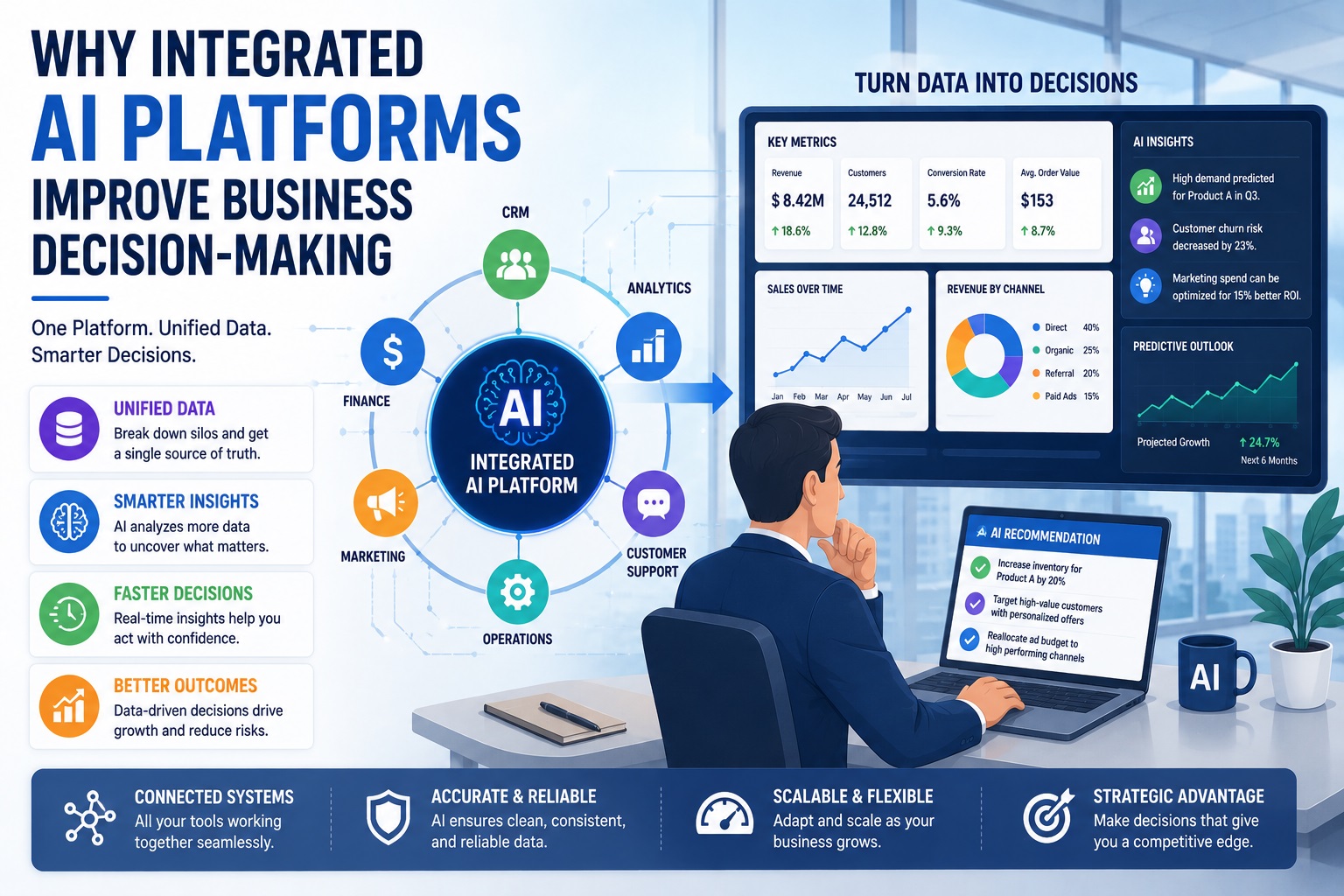
Business CRM solutions that combine sales, customer management, and automation also make it easier to act on data. Instead of pulling reports from three different platforms and trying to reconcile them in a spreadsheet, you get a single view of what’s happening and what needs attention.
Syncrux brings everything together in one platform, combining CRM, customer management, and AI-powered automation so teams can work from one connected system. Businesses can manage leads, customer communication, follow-ups, reporting, and workflows without constantly jumping between disconnected tools.
A CRM Software Comparison Worth Having
If you’re evaluating your options right now, the most important question isn’t which platform has the longest feature list. It’s simpler than that: how many of your other tools does it replace?
A genuinely integrated platform should be able to handle lead capture and pipeline management, automated follow-up sequences, full customer communication history across every channel, reporting and performance tracking, and post-sale support, all without needing a separate tool bolted on for each one.
When everything is in one place, the benefit isn’t just a smaller software bill. Your team spends less time switching between tools and more time focusing on customers and growing the business. That’s where the real return is.
Frequently Asked Questions
What challenges arise from using multiple sales & CRM tools?
Data ends up scattered, records go out of sync, and your team wastes time switching between systems instead of actually working. When sales and support aren’t looking at the same information, the customer experience suffers and reporting becomes a guessing game.
How can too many software tools increase operational costs?
The subscription fees are just the start. The bigger hit is productivity. More tools mean more training, slower onboarding, and more chances for things to slip through the cracks when data has to be moved manually between platforms.
Why do companies move toward unified CRM and automation platforms?
Because everything just runs cleaner. One place for your pipeline, your customer history, your comms, and your reporting means your team always knows what’s going on. And automation actually works the way it’s supposed to when it’s not trying to bridge five disconnected systems.
How do disconnected tools affect customer experience?
Your team goes into every conversation missing pieces. A sales rep doesn’t know about the support ticket from last week. A support agent has no idea what the customer bought or when. It creates a disjointed experience that customers pick up on pretty quickly.