A sales team drowning in unread lead notifications is not actually working smarter, no matter how full their pipeline looks.
You may wonder: how does AI CRM automation actually turn that mess into something a rep can act on?
Here is a real breakdown of how it works. It also covers what it handles and why it changes daily sales operations so significantly.
What AI CRM Automation Actually Does
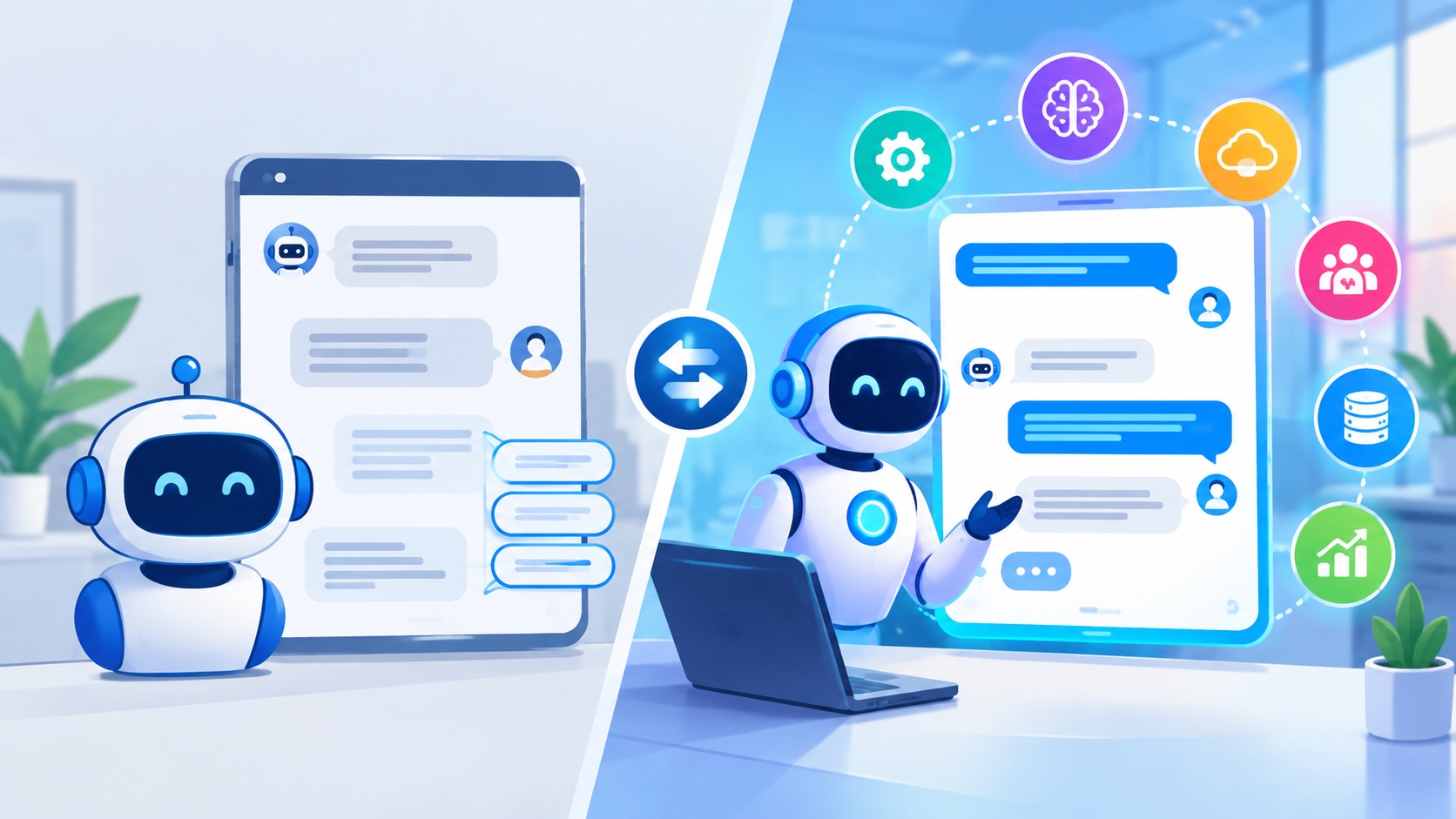
Traditional CRM software stores data. It rarely tells you what to do with it. AI CRM automation changes that equation entirely. It analyzes customer behavior, engagement patterns, and deal history to surface real, specific next steps instead of just displaying raw information.
Because this technology processes far more data points than any rep could manually track, it catches signals humans typically miss.
A prospect opening an email three times in one day becomes a flagged opportunity. The same goes for repeated pricing page visits, rather than an unnoticed data point buried in a spreadsheet.
When someone asks what AI CRM software actually adds beyond a standard database, the honest answer is interpretation. Raw data sitting in a system helps nobody. Data translated into a specific, timely action changes how fast a sales team actually moves.
How AI CRM Automation Turns Data Into Real Sales Actions
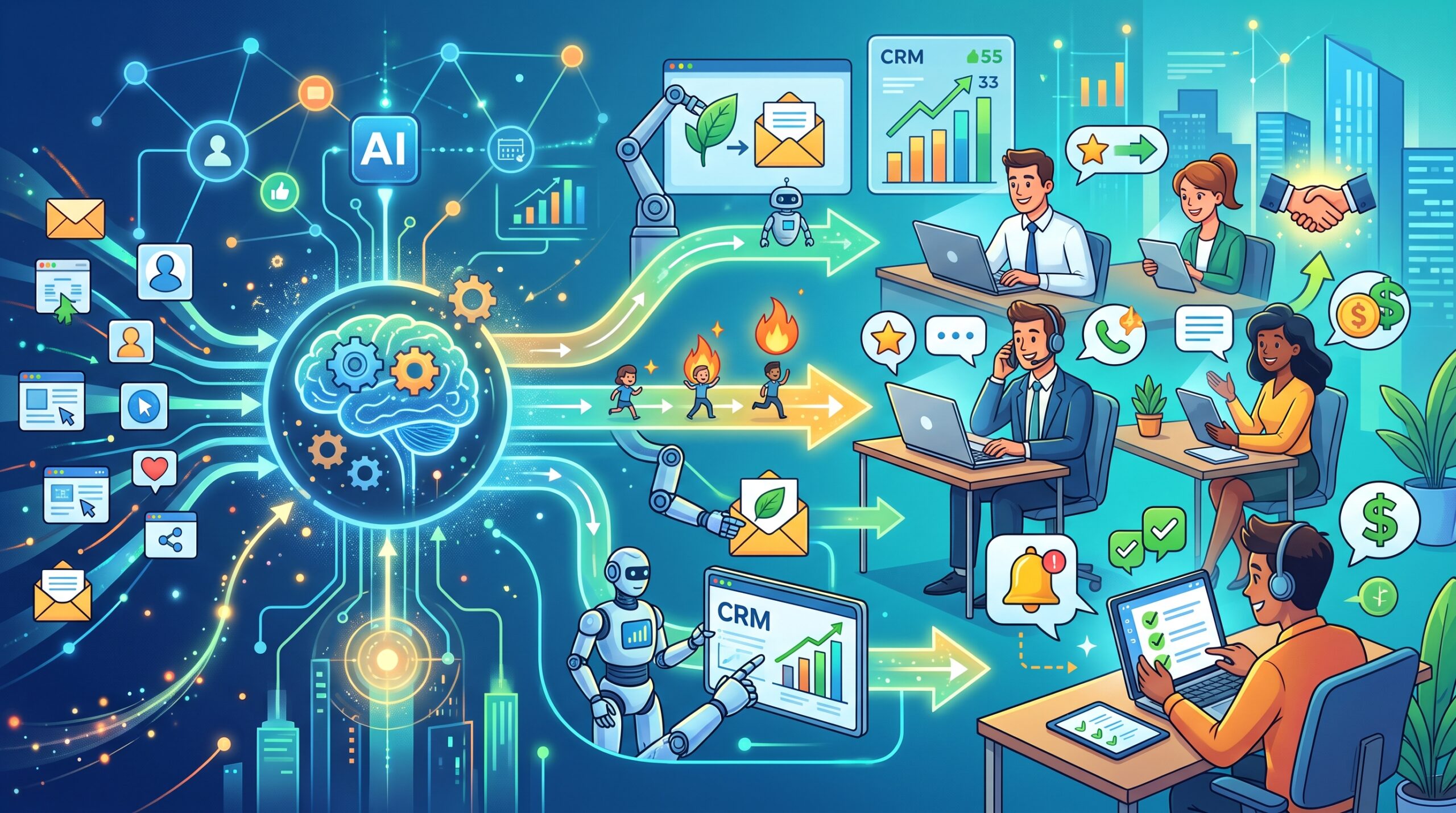
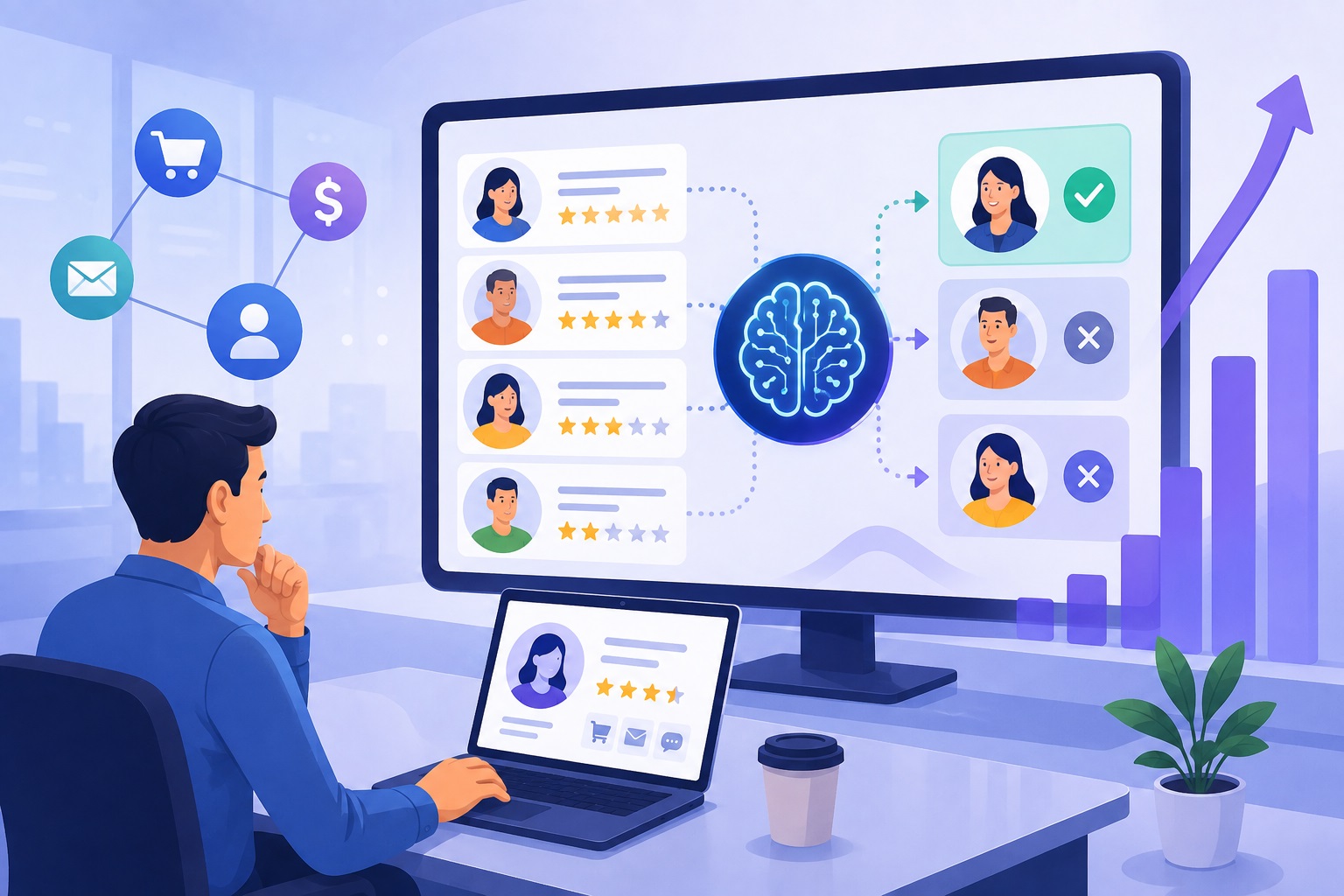
The real value shows up in how data gets converted into action. CRM automation with AI scores leads automatically. It ranks prospects based on engagement level, company fit, and buying signals pulled from multiple touchpoints at once. This scoring happens continuously.
Because of this, reps always see an updated priority list rather than a static one built once and forgotten.
Additionally, automated follow-up sequences trigger based on specific behavior, not a generic calendar schedule. If a prospect downloads a pricing sheet, the system responds right away.
It can automatically queue a relevant follow-up email or alert the assigned rep directly. So instead of hoping someone remembers to follow up, the system handles that timing automatically.
Curious how this actually plays out day to day for a sales rep. Picture opening your CRM each morning and seeing a ranked list of exactly who to contact first. Real signals drive that list, not a guess.
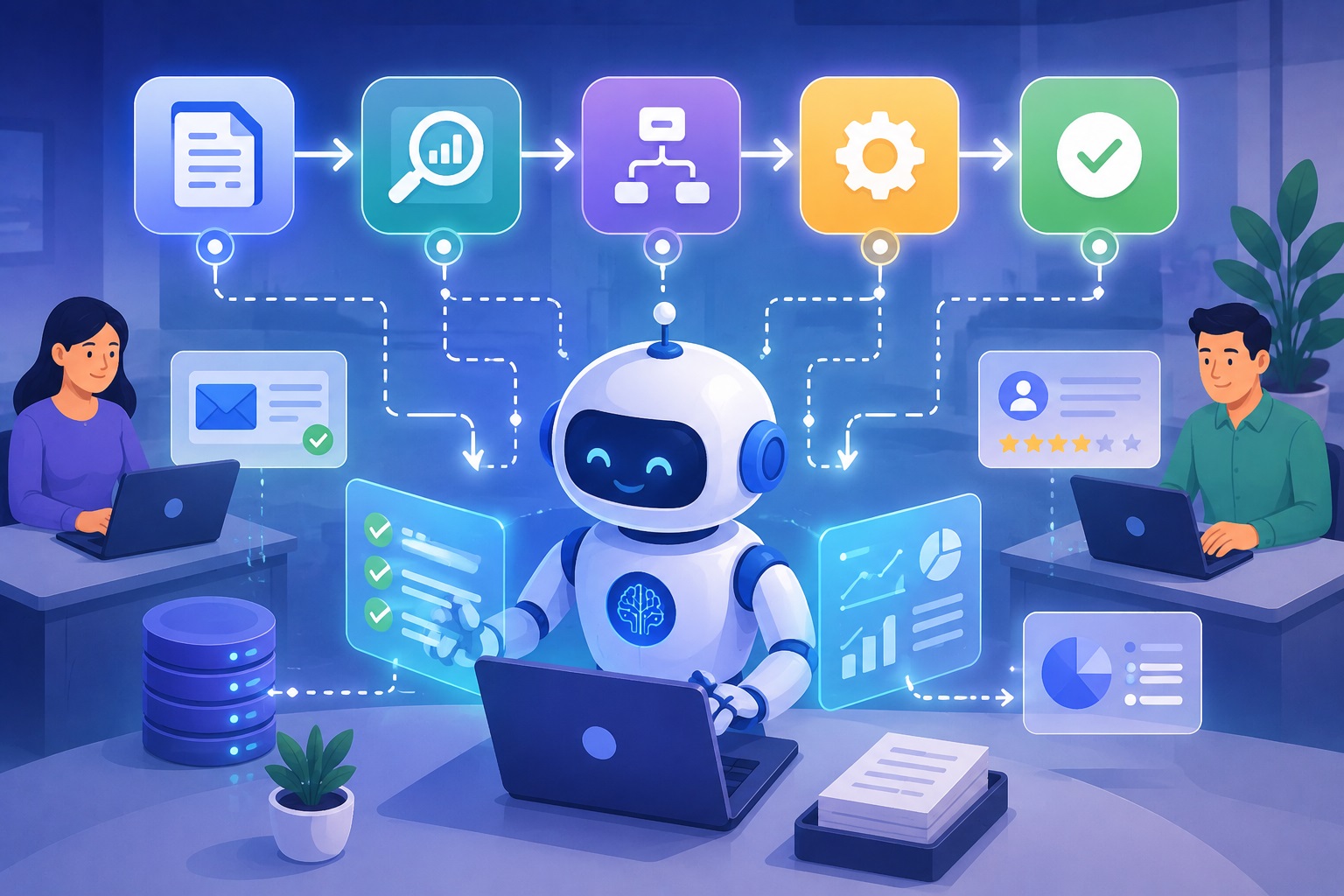
AI-powered CRM automation also handles data entry. It pulls information from emails, calls, and meetings directly into the system, so nobody has to type the notes manually after every call.
This alone reclaims hours each week that reps previously spent on administrative work instead of actual selling.
What Sales Tasks AI CRM Automation Handles Best
Several specific tasks benefit enormously from this kind of automation. Lead scoring and routing rank among the most impactful.
Intelligent CRM automation assigns a lead to the right rep instantly based on territory, deal size, or specialization, removing the delay manual routing typically creates.
Follow-up reminders and sequencing represent another major win. Timing matters so much in sales.
Because of this, automated sequences ensure no lead goes cold simply because a rep got busy with something else. Meeting scheduling gets simplified too. AI coordinates calendars and sends confirmations, cutting out the back-and-forth email chains that eat up everyone’s time.
Additionally, pipeline forecasting benefits significantly from AI analysis. The system tracks deal velocity, historical close rates, and current engagement levels. Because of this, forecasts become considerably more accurate than manual estimates based on gut feeling. Sales managers get a clearer, more reliable picture of what is actually likely to close this quarter.
Real Benefits For Sales Teams Using This Technology
Time savings top the list of benefits most teams notice immediately. Administrative tasks shrink dramatically. Because of this, reps spend more hours actually talking to prospects instead of updating records or hunting through old email threads.
With AI CRM, accuracy improves considerably. Human memory cannot be trusted with all details, and manually tracked leads may often contain outdated or incomplete information.
On the other hand, AI CRM automation keeps records current automatically. It gives every team member the same accurate picture at any given moment. Everyone is in sync and has accurate and ample information.
Additionally, conversion rates tend to improve once follow-up timing gets consistent. Lead prioritization becomes data-driven too, rather than based on whichever lead catches a rep’s attention first.
Hence, teams using this technology typically see measurable gains, not just smoother daily workflows.
Bringing Real Automation Into Your Sales Process
AI CRM automation genuinely changes how sales teams operate. It turns scattered customer data into clear, actionable next steps, not another dashboard nobody checks consistently.
From lead scoring to automated follow-up, this technology reclaims time while improving accuracy across the entire pipeline.
Syncrux helps sales teams implement AI CRM automation that actually fits their existing workflow. It is never a generic tool bolted on top of it. Ready to see what this could do for your team? Reach out today and let us show you a real demo.
Frequently Asked Questions
What is AI CRM automation?
Usually, AI CRM uses artificial intelligence to study customer data. With the data, it creates relevant sales actions such as lead scoring, follow-up sequences, and pipeline updates.
How does AI CRM automation turn customer data into sales actions?
So, what happens is that the AI CRM evaluates engagement signals such as emails, website visits, and call history. Then, it works to convert these patterns into specific recommendations.
What sales tasks can AI CRM automation handle?
AI CRM handles lead scoring and routing. Then it follows-up with sequencing and meeting scheduling. The CRM manages data entry from calls and emails, plus pipeline forecasting based on real engagement.
What are the benefits of using AI CRM automation for sales teams?
Well, the team gains significant time savings. And the bonus is accurate and current pipeline data. You can manage leads better and achieve higher conversion rates once timing becomes consistent and data-driven.