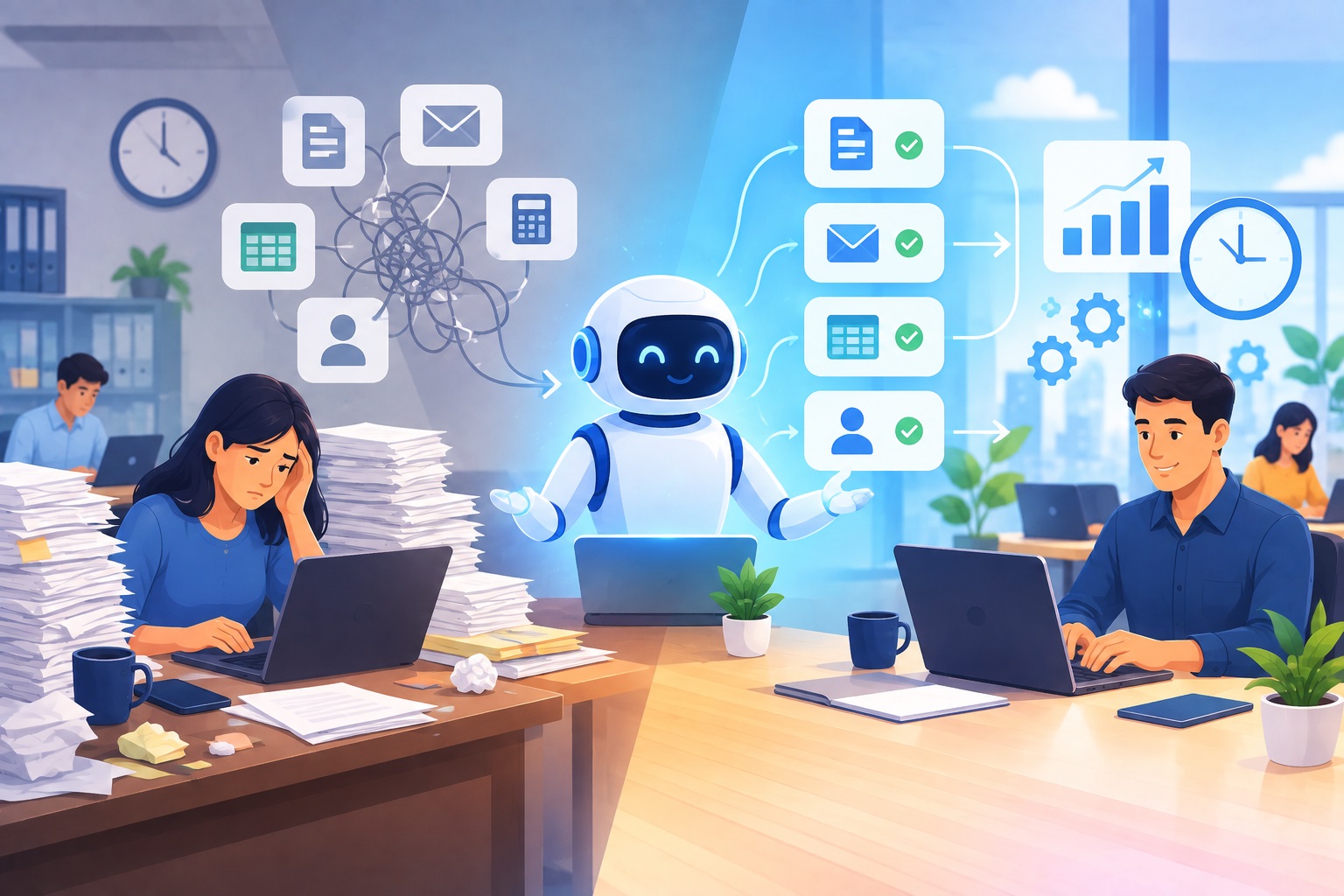
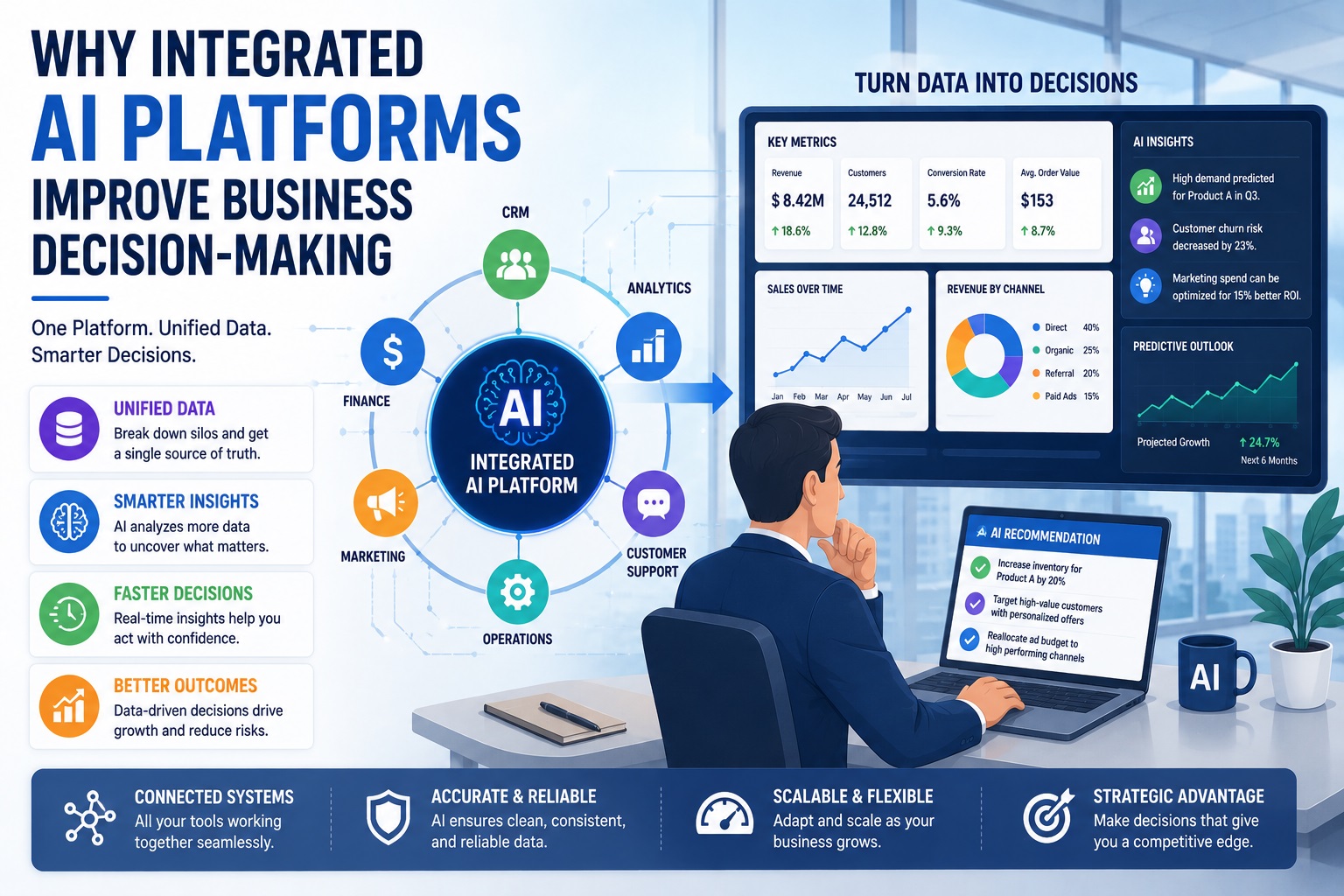
Businesses rarely run on simple, one-step tasks. A single customer request can trigger several actions across sales, marketing, support, finance, and operations. Managing these steps manually can slow teams down and create costly mistakes.
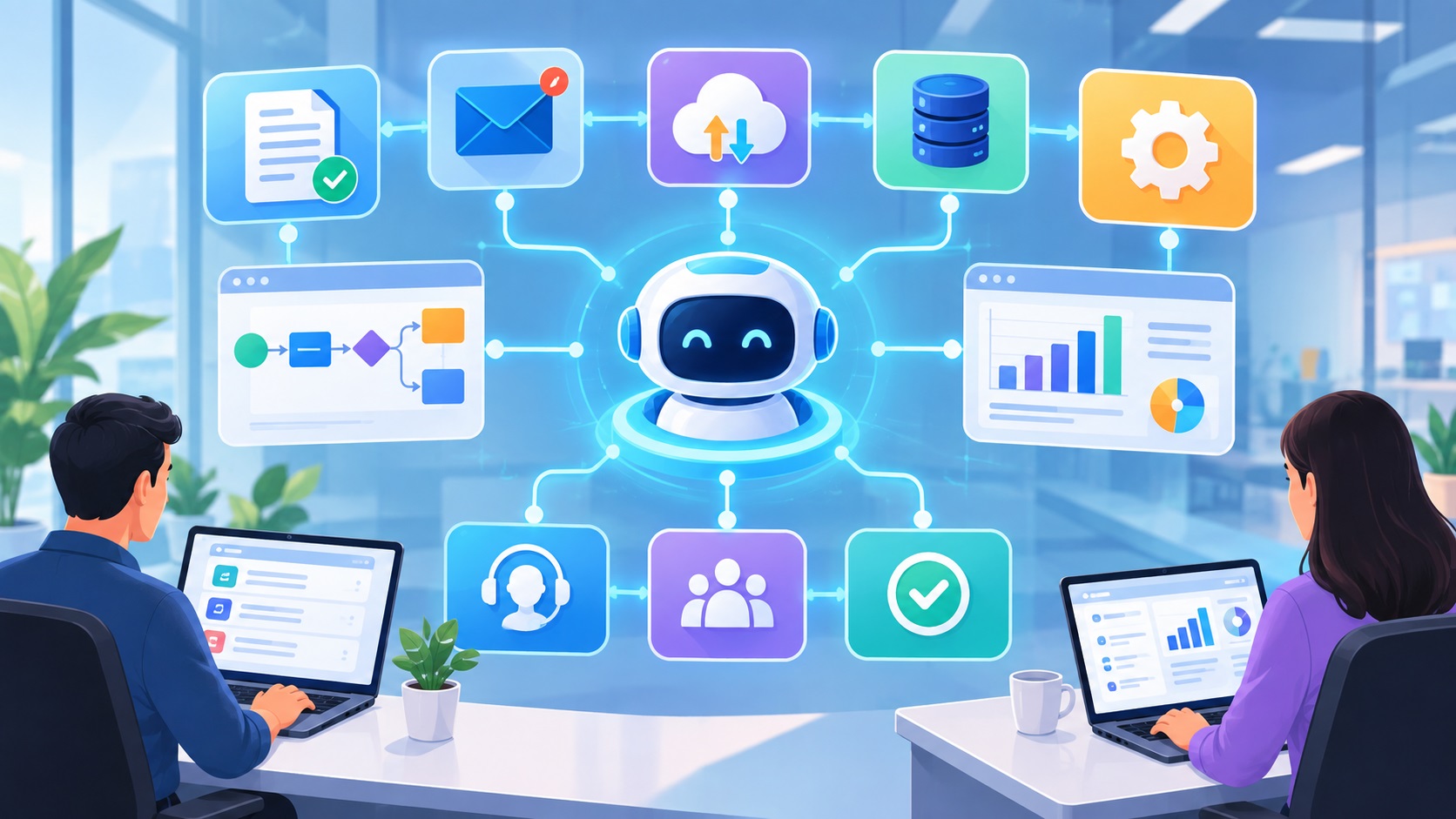
AI workflow orchestration helps businesses coordinate these complex processes from start to finish. It connects tasks, systems, data, and AI tools so each step happens at the right time. As a result, teams can automate more work without losing control of the overall process.
What Is AI Workflow Orchestration?
AI workflow orchestration coordinates multiple automated tasks within a larger business process. Instead of automating one isolated task, it manages how different tasks work together.
For example, a new lead may enter a company’s CRM. The system can qualify the lead, update customer data, send a personalized email, notify a sales representative, and schedule a follow-up. AI orchestration connects these actions into one coordinated workflow.
This approach gives businesses a clearer way to manage processes that involve several systems and decisions. It also reduces the need for employees to move information between different tools.
How AI Workflow Orchestration Works
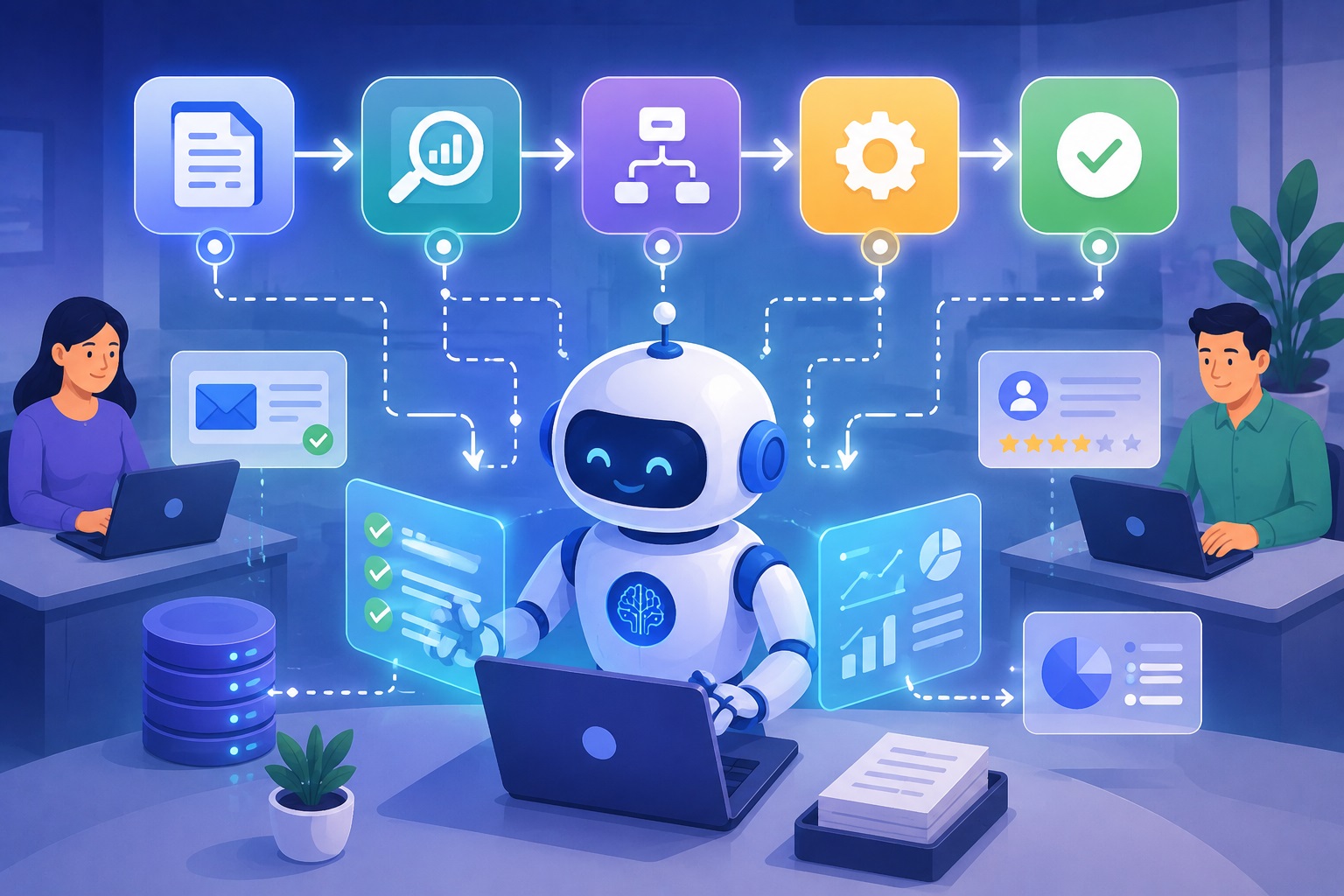
AI workflow orchestration starts with a business process. The system then identifies the actions, conditions, and decisions needed to complete that process.
AI can determine what should happen next based on available information. For instance, a customer inquiry might require different actions based on its urgency, topic, or customer history.
The workflow can then trigger the right tools automatically. It may update a CRM, send an email, create a task, analyze a document, or alert an employee.
Because these steps connect, businesses gain more than basic task automation. They create workflows that can respond to changing situations.
AI Workflow Automation vs. Traditional Automation
Traditional automation usually follows fixed rules. When a specific event happens, the system performs a predefined action.
That approach works well for simple and repetitive tasks. However, complex processes often require context and decision-making.
AI workflow automation adds intelligence to these workflows. AI can analyze information, identify patterns, and help determine the next appropriate action.
For example, traditional automation might send the same email after every form submission. An AI-powered workflow can review the submission and adjust the response based on the customer’s needs.
This difference becomes especially important as businesses handle larger volumes of work.
Coordinating Complex Business Processes
Complex processes often involve several departments and software systems. Without coordination, employees may spend hours checking updates and moving information between platforms.
Intelligent workflow orchestration brings these moving parts together. It creates a connected process where each action supports the next one.
Consider an e-commerce order. A completed purchase can trigger inventory updates, payment confirmation, shipping preparation, customer notifications, and internal reporting.
Instead of managing each step separately, orchestration connects the entire process. If something changes, the workflow can respond accordingly.
This creates a smoother experience for both employees and customers.
The Role of AI Process Orchestration
AI process orchestration becomes particularly valuable when workflows involve decisions rather than simple triggers.
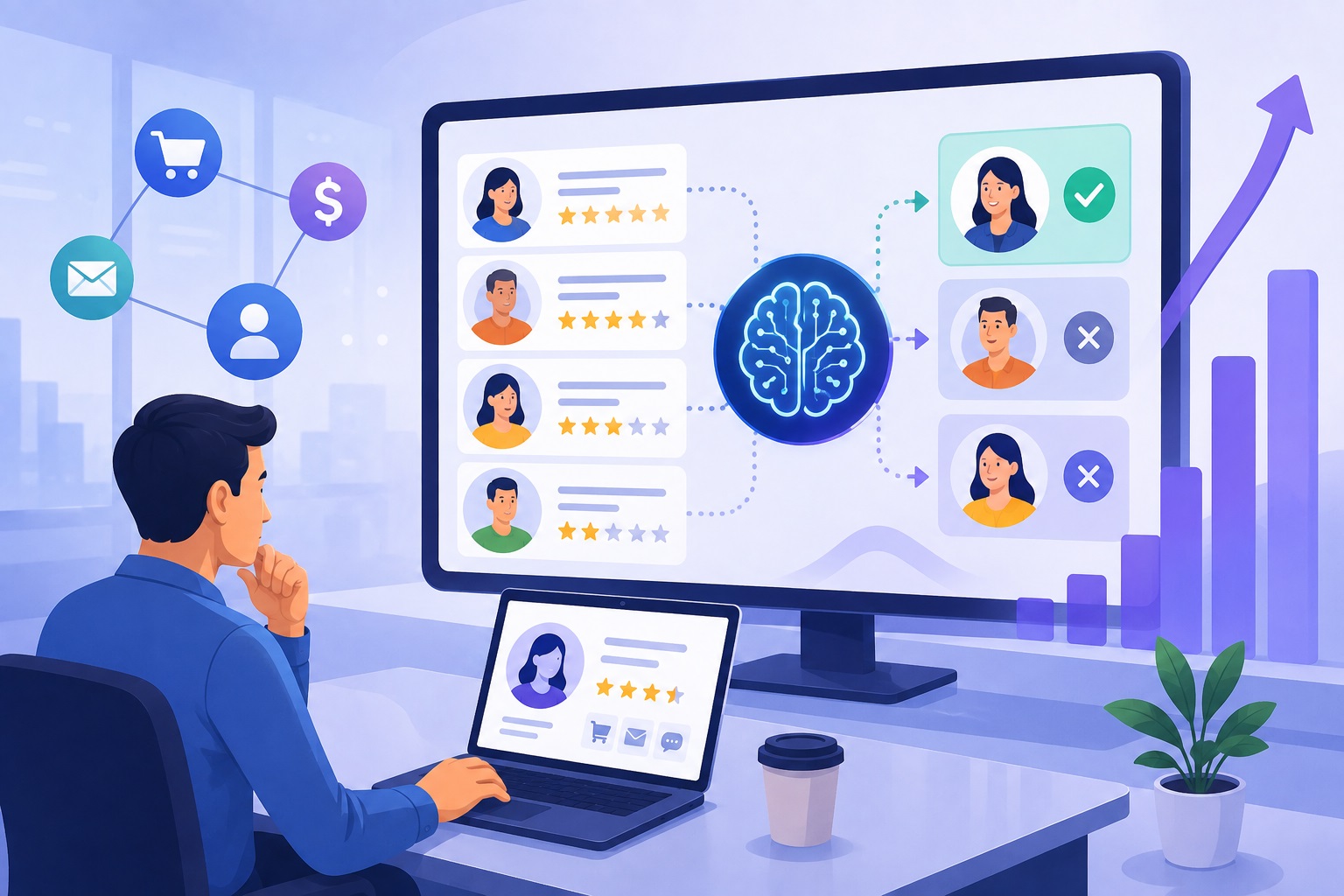
AI can evaluate incoming information and select different paths within a workflow. For example, a support request can receive different treatment based on its topic, customer value, urgency, or previous interactions.
The system can also recognize when a task requires human attention. Rather than trying to automate everything, it can route exceptions to the right employee.
This balance helps businesses automate routine work while keeping people involved where judgment matters most.
Where Businesses Can Use AI Workflow Orchestration
Customer Service
Customer service teams handle large volumes of repetitive requests. AI can classify inquiries, search for relevant information, draft responses, and route complex issues to employees.
The workflow can also update customer records automatically. This keeps information organized without requiring agents to complete every administrative step.
Sales and Lead Management
Sales teams often spend significant time qualifying leads and updating CRM records. Orchestrated workflows can handle many of these tasks automatically.
A workflow can capture a new lead, analyze its information, assign a score, update the CRM, and notify the appropriate salesperson. It can then schedule follow-ups based on the lead’s activity.
Marketing Operations
Marketing campaigns involve many connected activities. These include audience segmentation, content distribution, lead tracking, reporting, and follow-ups.
AI can coordinate these actions based on customer behavior. That allows marketing teams to respond faster while reducing repetitive manual work.
Finance and Administration
Finance teams manage invoices, approvals, reports, and document-heavy processes. AI can help extract information, check records, route approvals, and update financial systems.
With proper controls, these workflows can reduce administrative workloads and improve consistency.
Business Process Automation AI for Smarter Operations
Business process automation AI allows companies to move beyond simple task-based automation. It combines automation with AI-driven analysis and decision support.
For example, an automated workflow can detect a delayed payment and examine the customer’s account history. It can then determine the appropriate next step and notify the relevant team.
This approach makes automation more flexible. Businesses can build processes that respond to real-world conditions instead of following rigid instructions.
Moving Toward Autonomous Workflow Automation
Autonomous workflow automation takes orchestration a step further. Instead of waiting for employees to initiate every action, AI can monitor processes and take appropriate steps automatically.
The system can identify triggers, perform tasks, evaluate results, and continue the workflow. It can also escalate unusual situations when human input becomes necessary.
However, autonomy should come with clear rules and oversight. Businesses still need controls, permissions, monitoring, and review processes.
The goal is not to remove people from every workflow. Instead, it is to give employees more time for work that requires creativity, strategy, and judgment.
Choosing the Right AI Automation Platform
The technology behind orchestration matters. A strong AI automation platform should connect with the tools a business already uses.
Integration is especially important because businesses rarely operate from one system. CRM software, communication tools, accounting platforms, databases, and customer service systems often need to work together.
Businesses should also consider scalability, security, monitoring, and ease of use. A platform should make workflows easier to manage rather than adding another layer of complexity.
Benefits of AI Workflow Orchestration
The biggest advantage is coordination. Businesses can connect multiple tasks into one organized process.
It can also reduce repetitive work and improve process consistency. Employees spend less time switching between applications and checking routine updates.
Additionally, AI orchestration can help businesses respond faster. Automated workflows can operate continuously and react to events as they happen.
Over time, these improvements can support better productivity, customer experiences, and operational efficiency.
The Future of Automated Business Processes
As AI becomes more capable, businesses will move toward workflows that can understand context and adapt to changing conditions.
Simple automation will still have value. However, companies will increasingly combine automation, AI decision-making, and workflow orchestration.
The result will be more connected business operations. Instead of automating isolated tasks, companies can build intelligent systems that coordinate entire processes.
FAQs
What is AI workflow orchestration?
AI workflow orchestration connects multiple automated tasks, systems, and decisions into one coordinated business process. It helps determine what should happen next and ensures each step moves the workflow forward.
How is AI workflow orchestration different from traditional automation?
Traditional automation usually follows fixed rules and predefined triggers. AI workflow orchestration can analyze information, make context-based decisions, and adjust workflow paths when conditions change.
What business processes can AI workflow orchestration automate?
Businesses can use it for customer service, sales, marketing, finance, administration, document processing, lead management, reporting, and many other repetitive processes. The best use cases usually involve several connected steps.
What are the benefits of AI workflow orchestration for businesses?
AI workflow orchestration can reduce repetitive work, connect business systems, improve consistency, speed up processes, and help employees focus on higher-value tasks. It can also support more responsive and scalable operations.
Conclusion
Syncrux helps businesses connect AI, automation, and business processes through intelligent technology.
Its approach helps teams coordinate complex workflows while reducing repetitive manual work. With Syncrux, businesses can build smarter operations that move work forward with less friction.