Businesses run on processes. A single task often involves several steps, different tools, and multiple decisions.
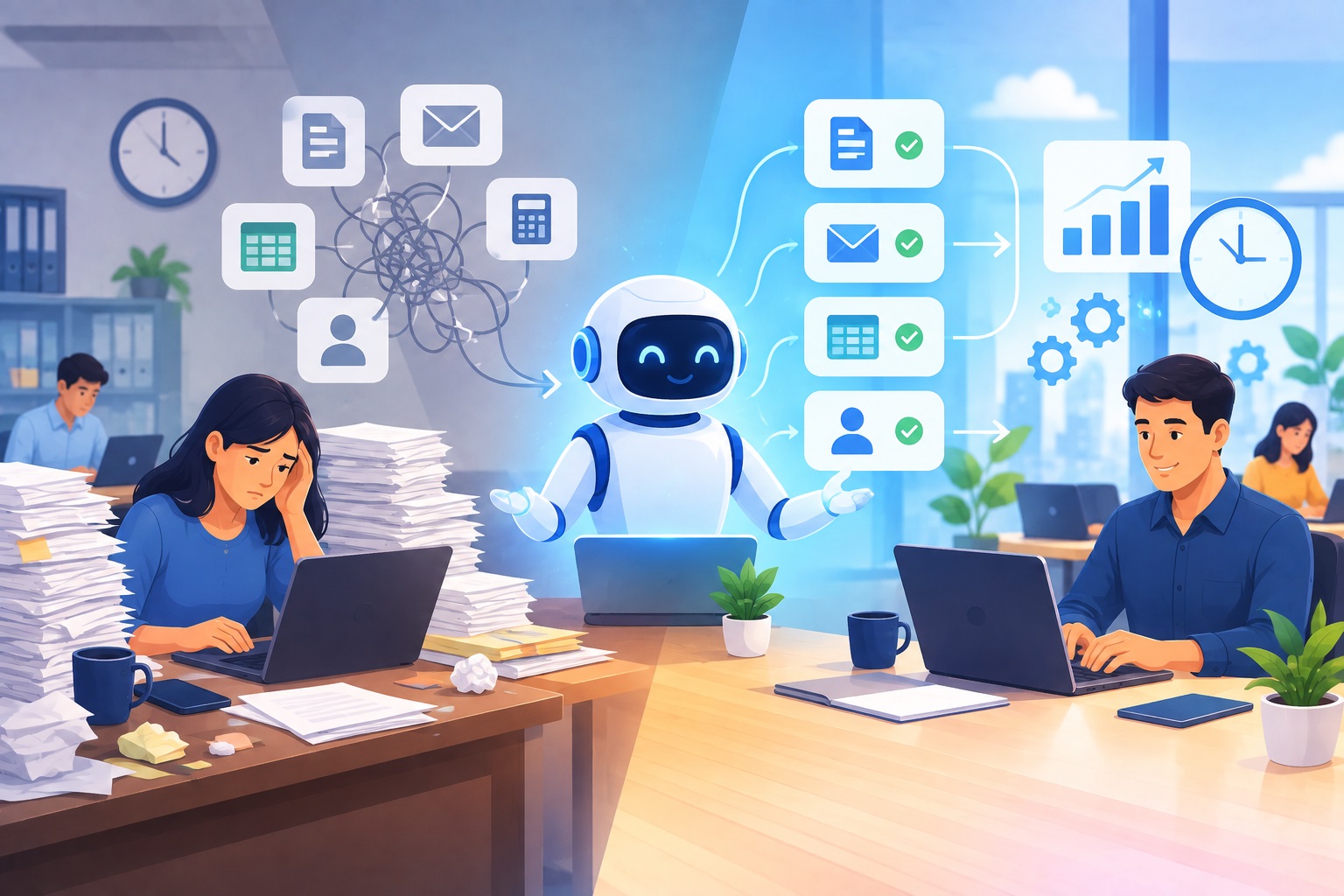
For example, handling a new sales lead may require collecting information, checking the CRM, qualifying the lead, sending a response, assigning a salesperson, and scheduling follow-ups. Doing every step manually takes time and increases the risk of delays.
This is where AI agents for business can make a major difference. Unlike basic automation, AI agents can handle complex tasks, respond to changing information, and move through multi-step workflows with less human input.
By combining decision-making, automation, and workflow management, businesses can create faster and more intelligent operations.
What Are AI Agents in Business?
AI agents are software systems that can work toward a specific goal. They can analyze information, make decisions based on available data, and take actions across connected tools.
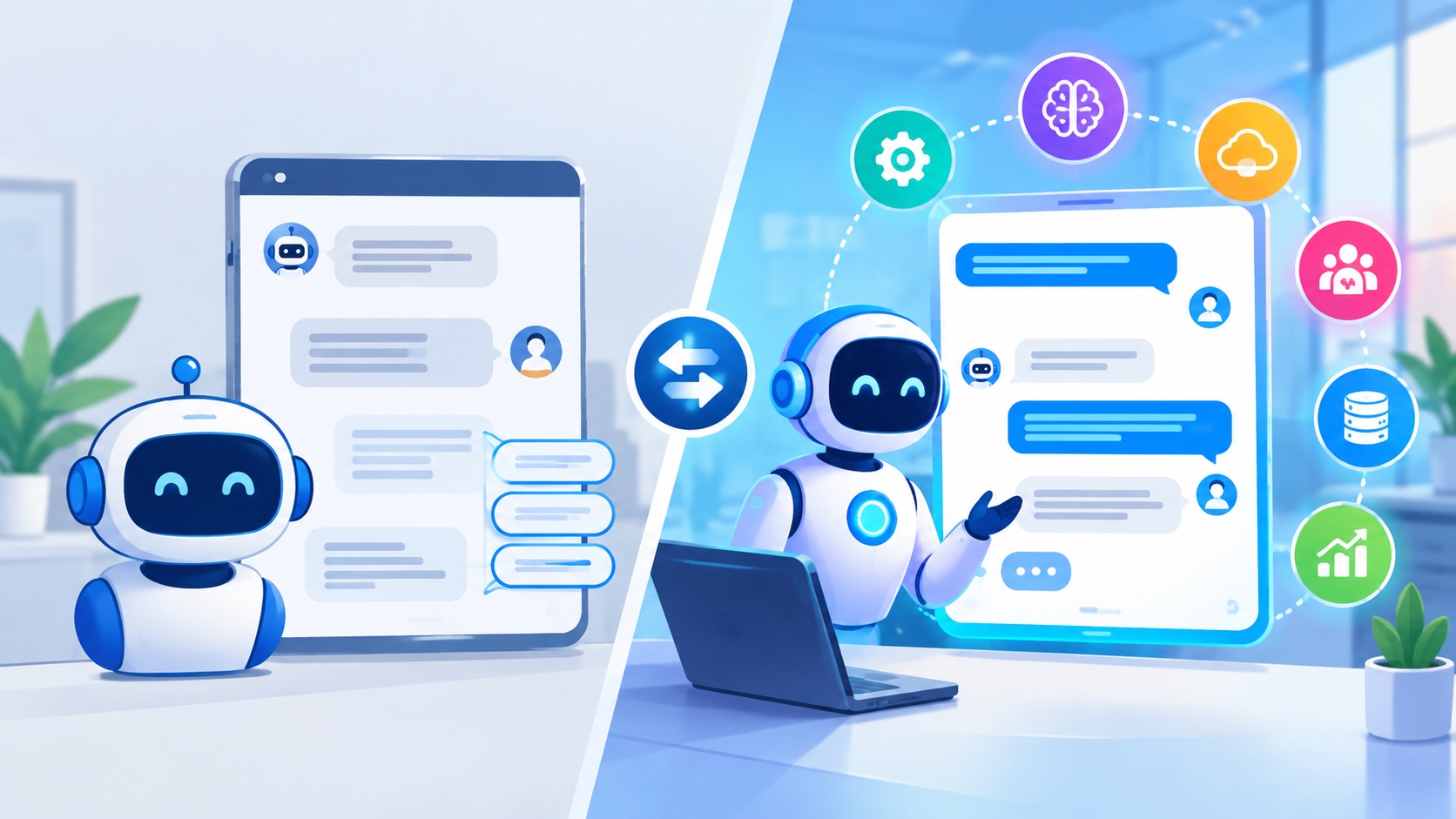
Traditional automation usually follows fixed instructions. An AI agent can take a more flexible approach when conditions change.
For instance, an agent may receive a customer request, review previous interactions, determine the next best action, and complete several tasks. It can also adjust its workflow when new information appears.
This makes autonomous AI agents useful for business processes that involve multiple steps and decisions.
How AI Agents Handle Multi-Step Workflows
A multi-step workflow usually requires several connected actions. Each action depends on the result of the previous one.
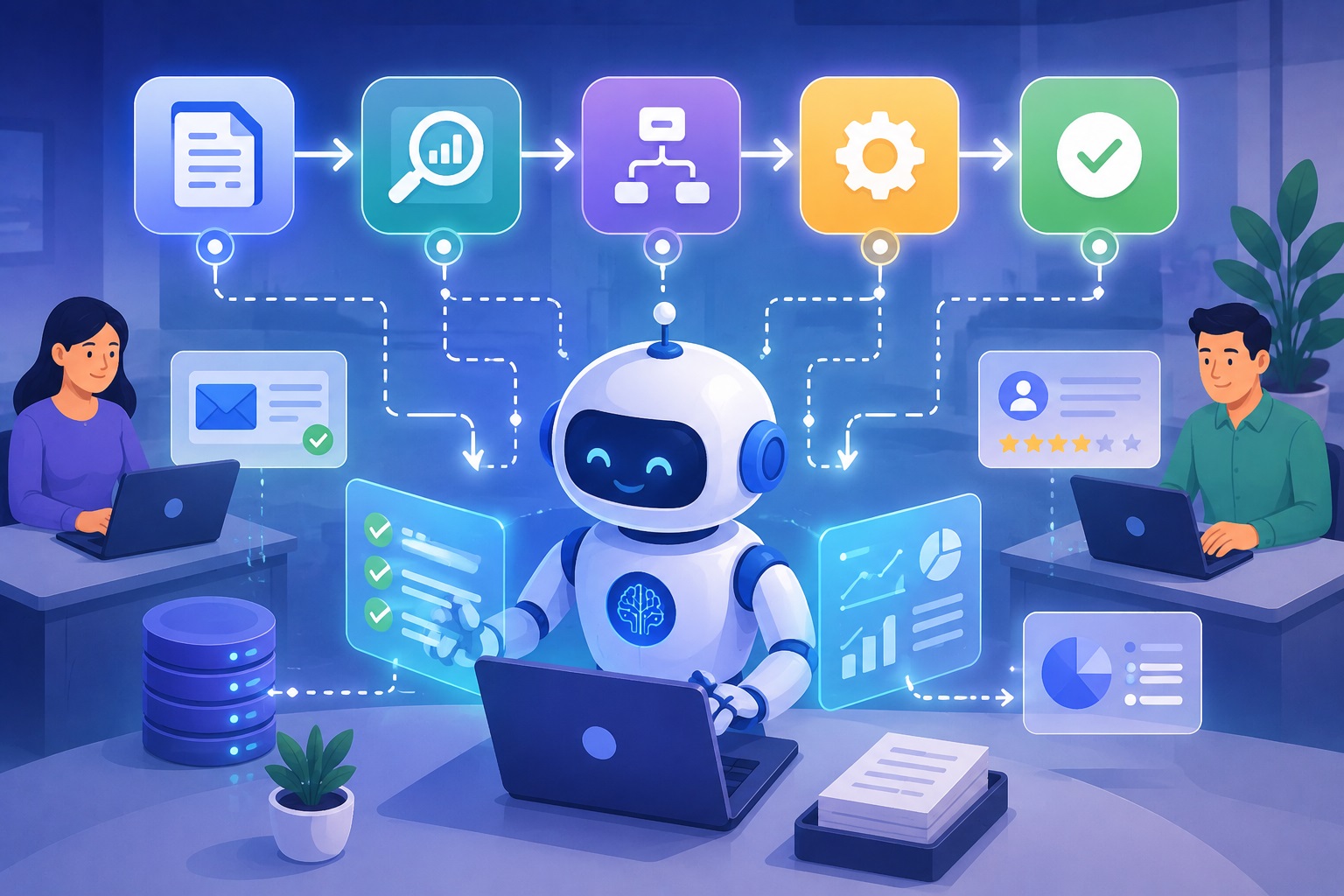
An AI agent can manage this process from start to finish. It can collect information, evaluate the situation, choose the next step, complete an action, and review the outcome.
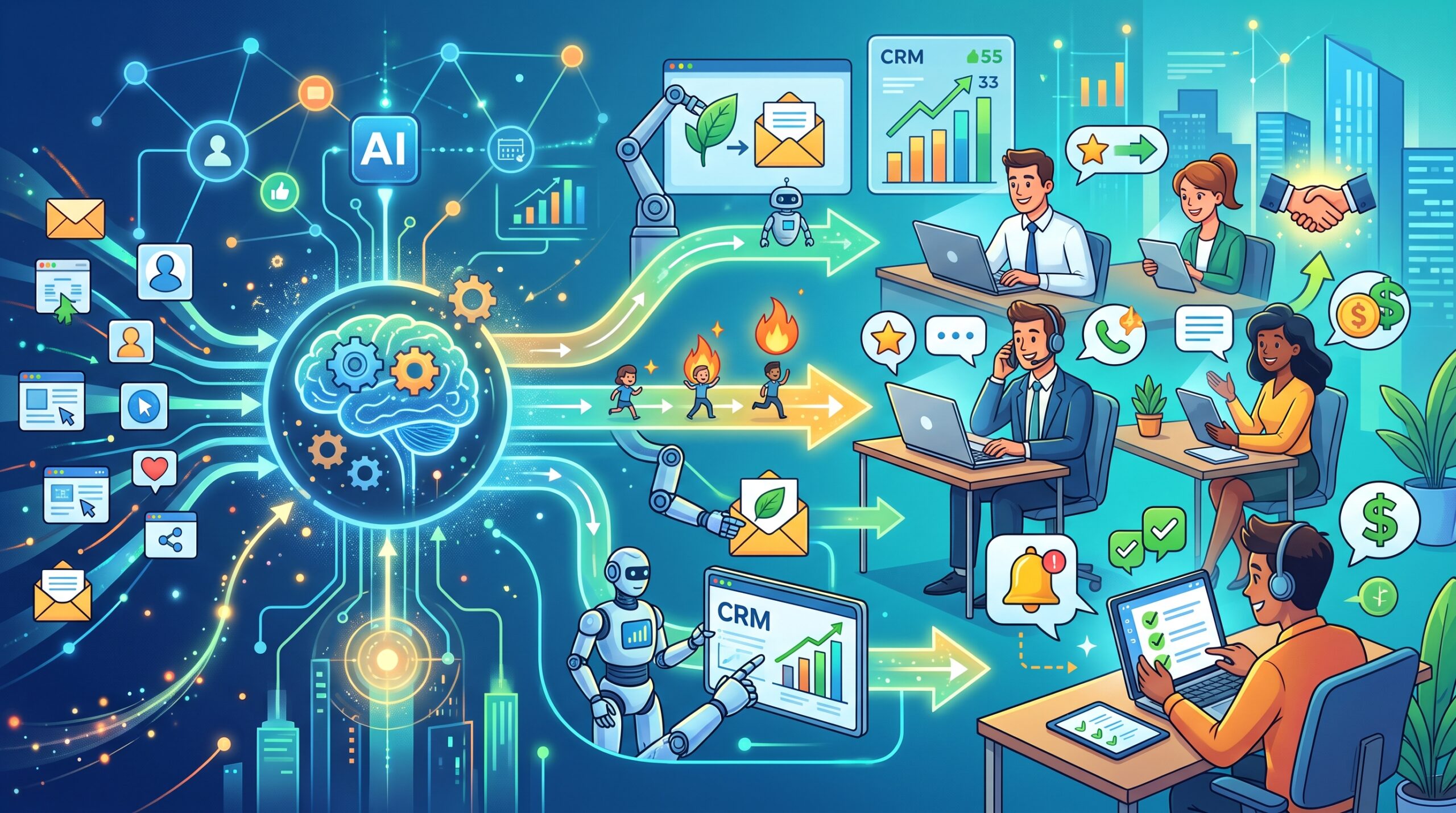
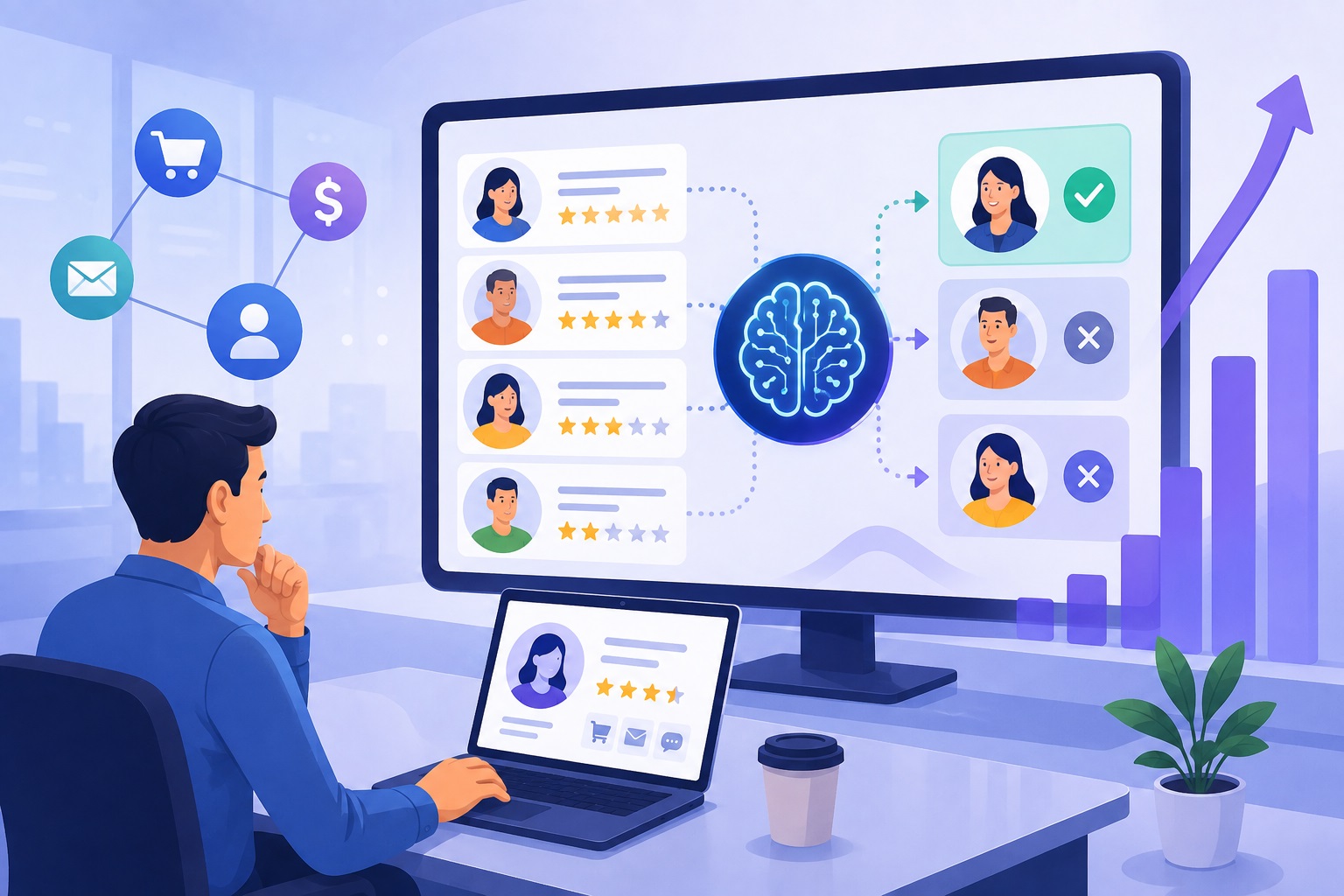
For example, imagine a new lead submits a form on a company website. The agent can review the information, check for duplicate records, add the lead to the CRM, assign a priority score, and notify the right salesperson.
It can then trigger a follow-up email and continue monitoring the lead’s engagement. This type of AI agent workflow automation keeps the process moving without requiring someone to manage every step.
AI Business Process Automation Goes Beyond Basic Rules
Basic automation works well for predictable tasks. A simple rule might say, “When this happens, send that email.”
However, many real business processes are not that simple. Customers provide different information, priorities change, and unexpected situations occur.
AI business process automation adds intelligence to these workflows. AI agents can evaluate context and choose from different actions based on the information available.
This gives businesses more flexibility than traditional rule-based systems. Instead of building a separate rule for every possible scenario, organizations can create intelligent processes that adapt.
Autonomous Workflow Automation Reduces Manual Follow-Ups
Repetitive follow-ups consume valuable employee time. Sales, support, and operations teams often spend hours checking whether a task has been completed.
Autonomous workflow automation can reduce this burden. AI agents can monitor processes and take the next action when specific conditions are met.
For example, an agent can check whether a customer responded to an email. If there is no response, it can schedule a follow-up or alert a team member.
Likewise, it can recognize when a task requires human attention. This creates a smoother workflow while keeping people involved when their judgment matters.
AI Process Orchestration Connects Different Business Tools
Most businesses use several software platforms. A process may involve a CRM, email platform, calendar, support system, and internal communication tool.
Moving information between these tools manually creates unnecessary work. It can also lead to missed updates and inconsistent records.
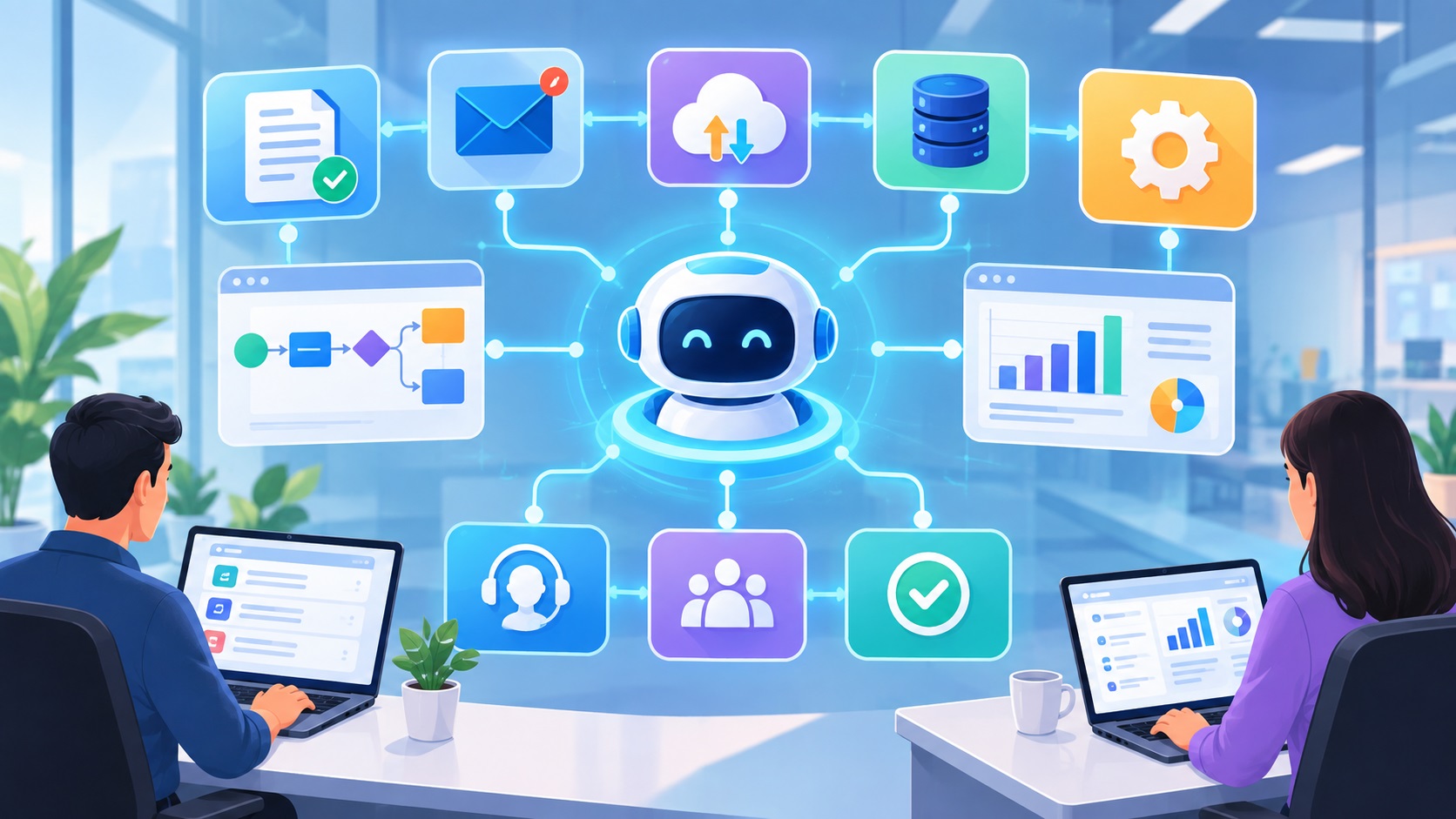
AI process orchestration helps coordinate actions across connected systems. An AI agent can move between platforms and complete each step in the right order.
For example, it may collect information from a form, update the CRM, create a task, send an email, and notify a team through a communication platform.
As a result, businesses can create connected processes instead of relying on isolated tools.
Intelligent Business Automation Supports Faster Decisions
Speed matters when businesses handle customer requests, sales opportunities, and internal operations.
An AI agent can analyze available information and recommend or take the next step quickly. This reduces delays caused by manual reviews and routine approvals.
Intelligent business automation can also help teams prioritize their work. Instead of treating every task equally, AI can identify urgent requests and highlight important opportunities.
This helps employees focus their attention where it can create the greatest impact.
Business Processes AI Agents Can Automate
AI agents can support many business functions. Their usefulness depends on the quality of the connected systems and the goals of the workflow.
In sales, AI agents for business can qualify leads, update CRM records, schedule follow-ups, and prioritize opportunities. They can also monitor engagement and alert representatives when a prospect shows stronger buying intent.
Customer support teams can use AI agents to categorize requests, collect relevant information, suggest responses, and route complex issues to the right person. This can reduce response times and improve consistency.
Operations teams can use agents to monitor workflows, coordinate tasks, and flag unusual situations. Finance and administrative teams can also automate document handling, reporting, and routine data checks.
The goal is not to automate everything. Businesses should automate repetitive processes while keeping people involved in important decisions.
Autonomous AI Agents Can Work Around the Clock
Employees need breaks and have limited working hours. Business processes, however, often continue outside those hours.
Autonomous AI agents can monitor workflows continuously. They can respond to new information, complete routine tasks, and keep processes moving.
This can be especially valuable for businesses serving customers across different time zones. A lead does not have to wait until the next morning for the first automated response.
Continuous monitoring also helps businesses identify problems earlier. When the agent detects a failed process or missing information, it can take corrective action or alert the right team.
AI Agents Do Not Replace Human Employees
AI agents can handle many repetitive tasks, but they do not completely replace employees.
People still bring judgment, creativity, empathy, and experience to business decisions. AI agents work best when they support employees instead of trying to remove humans from every process.
For example, an agent can collect information and recommend a response. A human can then handle a sensitive customer conversation or approve a high-impact decision.
This human-AI partnership creates a stronger balance. Teams spend less time on routine work and more time solving problems that require real expertise.
How Businesses Can Start Using AI Agents
Businesses should start with a clear process that already creates delays or repetitive work. There is no need to automate every workflow at once.
First, identify the steps involved in the process. Next, determine which steps require human judgment and which ones an AI agent can manage safely.
Then connect the necessary business tools and define clear goals for the agent. Businesses should also monitor results and refine the workflow over time.
Starting with one practical use case can make AI agent workflow automation easier to manage and scale.
The Future of AI-Driven Business Processes
AI agents will continue to become more capable. Businesses will use them to manage increasingly complex workflows across multiple departments.
Future systems may analyze goals, plan actions, coordinate software tools, and adapt workflows with even greater independence. However, responsible oversight will remain important.
The most successful businesses will likely combine AI speed with human expertise. This approach can create efficient processes without losing the judgment people bring to complex situations.
As AI technology evolves, AI business process automation will become an important part of how modern organizations operate and grow.
FAQs
What are AI agents in business automation?
AI agents are intelligent software systems that can analyze information, make decisions, and complete tasks to achieve specific business goals.
How can AI agents handle multi-step workflows?
AI agents can complete connected actions in sequence. They can review information, choose the next step, use connected tools, and adapt when conditions change.
What business processes can AI agents automate?
AI agents can support lead qualification, customer service, CRM updates, follow-ups, task management, reporting, document processing, and other repetitive workflows.
Do AI agents completely replace human employees?
No. AI agents can automate repetitive tasks, but people remain important for creativity, empathy, complex judgment, and high-impact business decisions.
Conclusion
AI agents can transform complex processes by handling connected tasks with less manual supervision. Through autonomous workflow automation, AI process orchestration, and intelligent business automation, companies can reduce delays and help teams focus on higher-value work.
Syncrux helps businesses use AI agents to connect workflows, automate repetitive processes, and improve daily operations.
Its intelligent solutions support AI agents for business that can manage multi-step tasks across connected systems. With Syncrux, businesses can build smarter workflows that combine AI efficiency with meaningful human oversight.