Repetitive work takes up more time than many businesses realize. Employees spend hours entering data, updating records, sending follow-ups, sorting requests, and moving information between software tools.
These tasks may seem small individually, but they add up quickly. They can also distract employees from work that requires creativity, judgment, and human interaction.
This is where AI agents for business are changing the way teams work. Instead of following one fixed rule, AI agents can understand tasks, make decisions, use connected tools, and complete several steps with minimal human input.
As a result, companies can reduce manual work while creating faster and more flexible business processes.
What Are AI Agents?
AI agents are software systems that can work toward a specific goal. They can analyze information, decide what action to take, and complete tasks across connected applications.
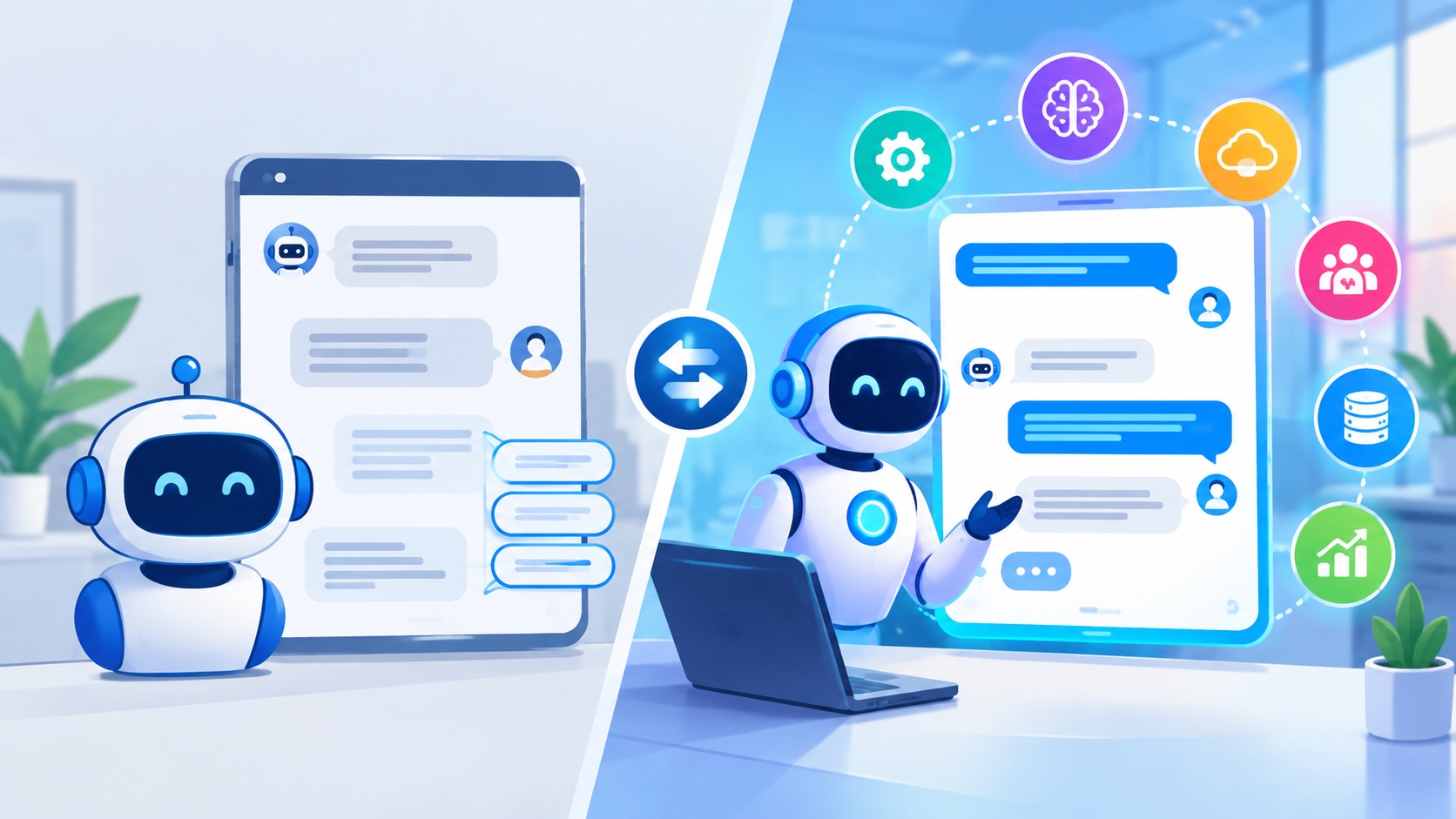
Traditional automation usually follows predefined instructions. AI agents can handle more flexible situations because they can evaluate context before deciding what to do next.
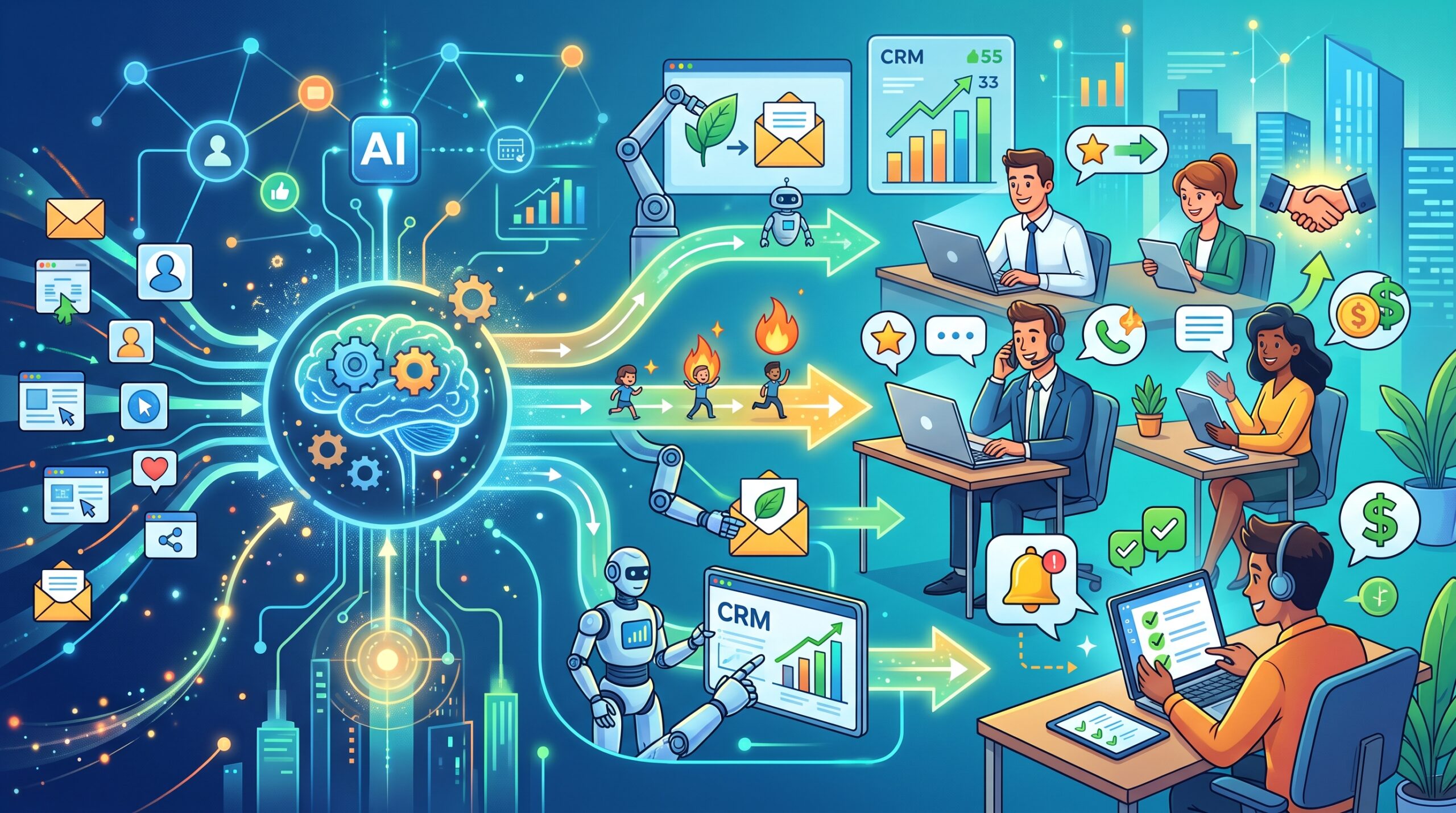
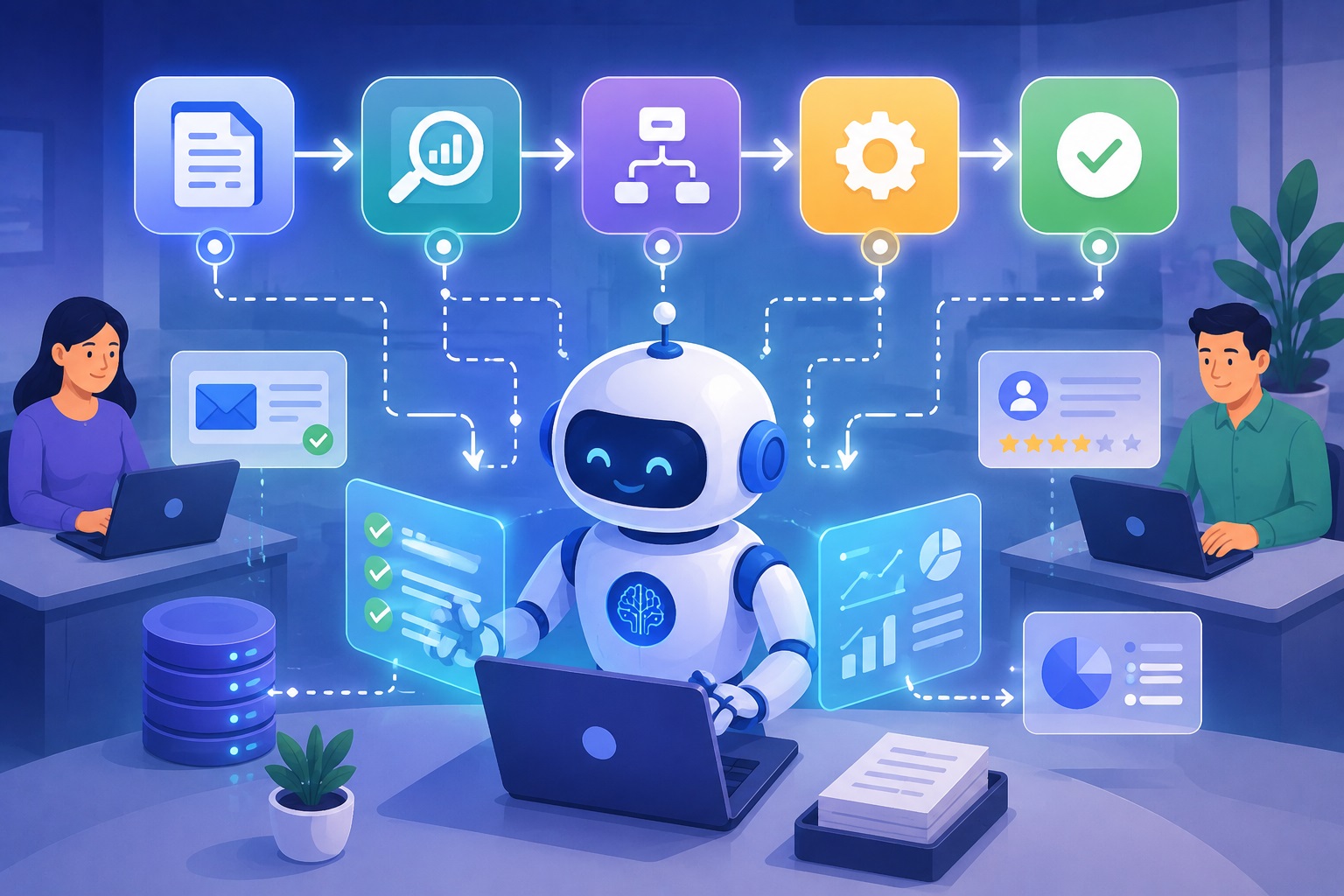
For example, an AI agent could receive a new customer inquiry, review the customer’s history, identify the right department, update the CRM, and send an appropriate response.
That ability makes AI agents particularly useful for repetitive business processes that involve several connected steps.
Why Repetitive Work Creates Business Problems
Repetitive tasks are not necessarily difficult. However, they can consume valuable employee time.
A sales representative may spend part of each day updating CRM records. A support employee might repeatedly categorize customer requests. An operations team may manually move information between different systems.
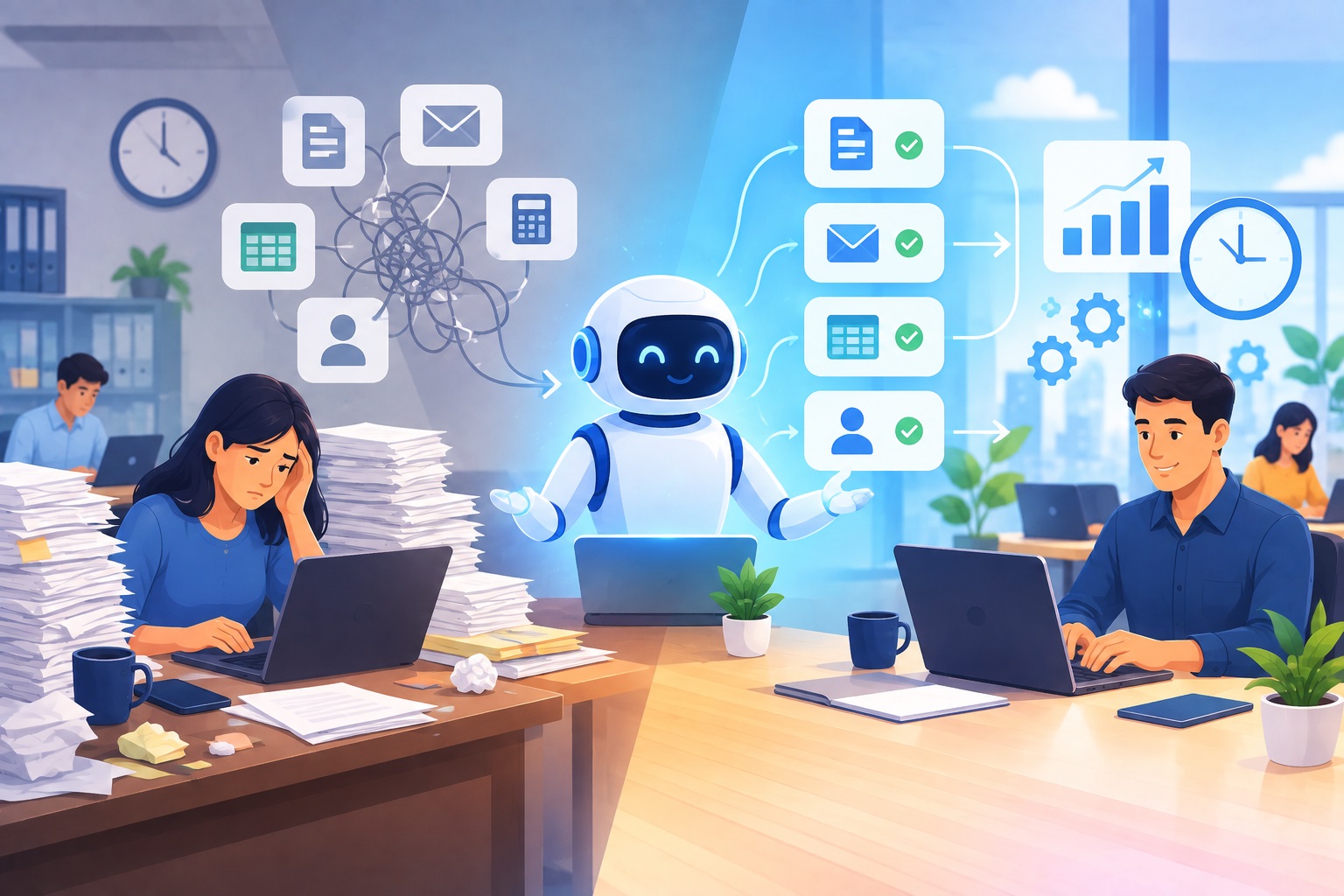
Over time, these tasks can slow productivity and increase frustration. Manual work can also create errors when employees enter the same information multiple times.
By using AI task automation, businesses can move routine responsibilities to intelligent systems and give employees more time for meaningful work.
How AI Agents Go Beyond Traditional Automation
Traditional automation works well when a process follows predictable rules. For example, a system can automatically send an email whenever someone submits a form.
However, real business processes often involve exceptions. Customers provide different information, priorities change, and situations do not always follow the same path.
AI agents can evaluate these differences and adjust their actions. This makes them more flexible than simple rule-based automation.
With autonomous AI workflows, an agent can monitor a process, determine what should happen next, and continue working without requiring an employee to trigger every step.
AI Business Process Automation Reduces Manual Work
Businesses handle countless processes every day. Many involve repetitive actions that employees could complete more efficiently with AI.
AI business process automation allows organizations to connect these tasks into intelligent workflows. An AI agent can collect information, process it, update systems, and notify the appropriate employee.
Consider a new sales lead. Instead of requiring a salesperson to manually review the submission, enter the information, research the company, and schedule follow-up activities, an AI agent can handle much of that process.
The salesperson can then focus on the actual conversation instead of administrative work.
Intelligent Task Automation Helps Employees Work Smarter
Automation should not simply remove tasks. It should help employees spend their time more effectively.
Intelligent task automation can take care of repetitive activities while leaving important decisions to people.
For example, an AI agent might review incoming support tickets and identify their priority. It can handle routine requests automatically while sending complicated cases to a human representative.
This approach creates a practical balance. AI handles speed and repetition, while employees focus on judgment and customer relationships.
AI Workflow Automation Software Connects Business Tools
Modern companies rarely rely on a single software platform. They use CRMs, email systems, calendars, communication tools, accounting platforms, and project management applications.
Moving information between these systems manually can create unnecessary work. It can also lead to missed updates and inconsistent records.
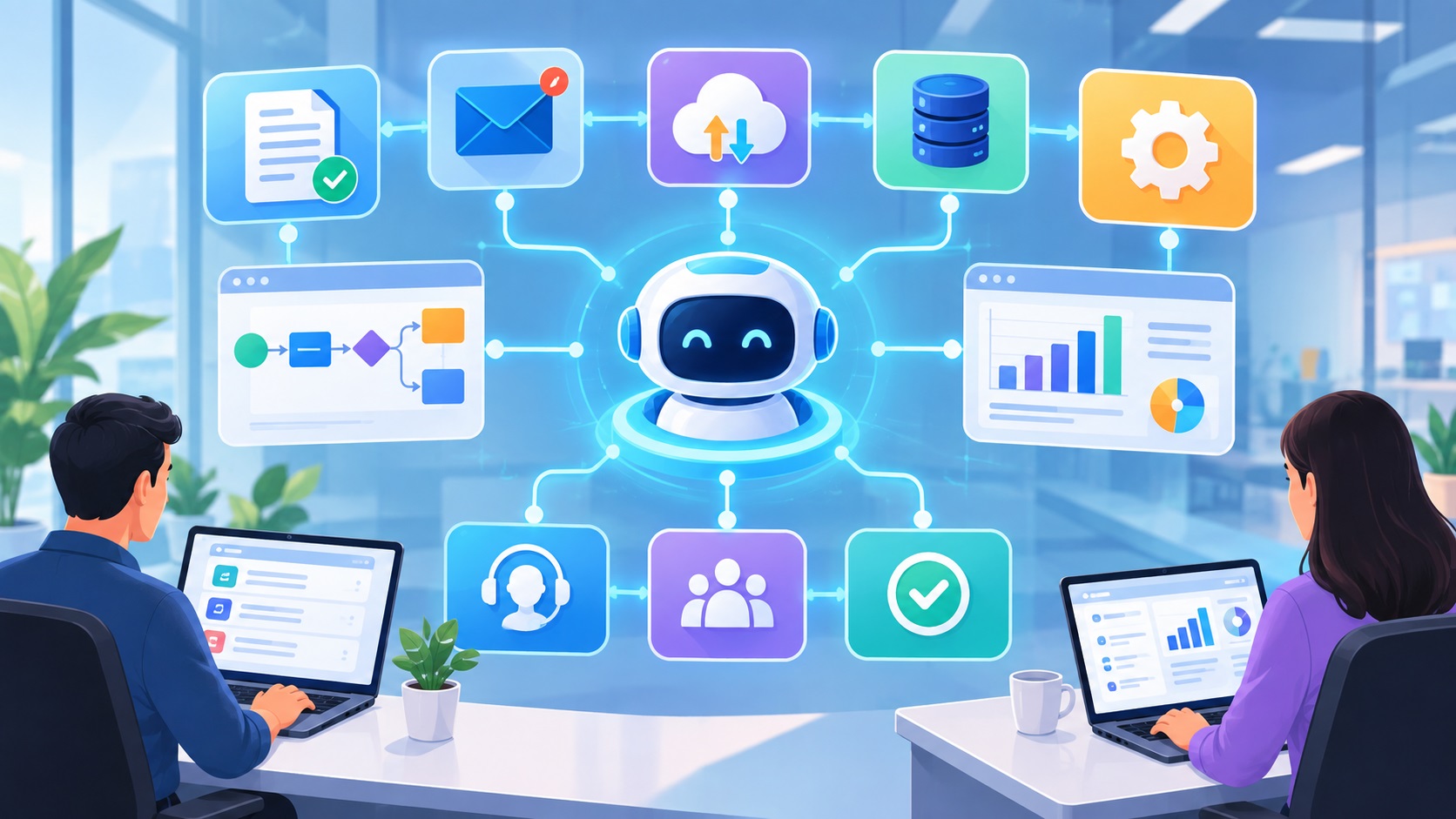
AI workflow automation software can connect different applications and coordinate actions between them.
For example, when a customer completes a purchase, an AI workflow could update the CRM, notify customer support, create an internal task, and trigger a follow-up message.
The employee does not need to manage each step manually.
Common Tasks AI Agents Can Handle
AI agents can support repetitive work across many departments.
Sales teams can use them to qualify leads, update customer records, schedule meetings, and send follow-up messages. Marketing teams can automate campaign tasks, organize customer information, and monitor engagement.
Customer service teams can use AI agents to categorize requests, gather customer details, answer routine questions, and route complex issues.
Operations teams can automate status updates, task assignments, notifications, and information collection. Finance teams can also use AI to support document processing, reporting, and routine data checks.
The best use cases usually involve tasks that happen frequently and follow a recognizable process.
Business AI Automation Tools Improve Productivity
Companies now have access to a growing range of business AI automation tools. These solutions can help teams automate individual tasks or coordinate entire workflows.
The important factor is not how many tasks a business can automate. Instead, companies should focus on whether automation solves a real operational problem.
A good starting point involves identifying tasks that employees repeat every day. Businesses can then determine which tasks require human judgment and which ones AI can safely handle.
This approach creates practical automation instead of adding unnecessary technology.
AI Agents Can Work Continuously
Employees have working hours. Business processes often do not.
AI agents can monitor workflows continuously and respond when specific events occur. This can help businesses respond to leads, customers, and internal requests more quickly.
For example, an AI agent could respond to a new inquiry outside normal business hours. It could collect initial information and prepare the lead for a salesperson to review later.
This does not mean businesses should remove human involvement. Instead, AI keeps routine processes moving until an employee needs to step in.
Human Employees Still Matter
AI agents can handle repetitive work, but they do not eliminate the need for people.
Employees bring creativity, empathy, experience, and judgment to situations that technology cannot always understand fully.
A customer with a complicated complaint may need a thoughtful human response. A major business decision may require experience and strategic thinking.
That is why successful AI adoption focuses on collaboration. AI handles repetitive processes, while employees focus on work where human skills create the most value.
How Businesses Can Start With AI Agents
Businesses do not need to automate everything immediately. Starting small often produces better results.
First, identify one repetitive process that consumes significant employee time. Then map the steps involved and determine where AI can safely take responsibility.
Next, connect the necessary systems and define clear expectations for the AI agent. Monitor its performance and adjust the workflow as the business learns what works.
Over time, successful workflows can expand to other departments and processes.
The Future of Repetitive Business Work
AI agents will continue to become more capable. They will manage increasingly complex workflows and work across more business applications.
The shift will not simply involve replacing individual tasks. Businesses will increasingly redesign entire processes around AI-assisted workflows.
Companies that adopt AI business process automation thoughtfully can reduce administrative work, improve response times, and give employees more time for valuable activities.
The future of work will likely involve people and AI working side by side. AI will handle more routine execution, while people focus on decisions, relationships, creativity, and strategy.
FAQs
What are AI agents and how do they automate business tasks?
AI agents are software systems that analyze information, make decisions, and complete tasks toward a specific goal. They can automate multiple connected steps instead of following one simple rule.
What repetitive business tasks can AI agents handle?
AI agents can handle tasks such as data entry, CRM updates, lead qualification, customer inquiries, scheduling, follow-ups, reporting, notifications, and document processing.
How are AI agents different from traditional automation?
Traditional automation usually follows fixed rules. AI agents can evaluate context, make decisions, and adapt their actions when circumstances change.
Can AI agents reduce the amount of manual work employees do?
Yes. AI agents can handle repetitive and administrative tasks, allowing employees to focus more on customer relationships, creative work, strategic decisions, and complex problems.
Conclusion
AI agents are changing repetitive work by combining automation with decision-making. With AI task automation, autonomous AI workflows, and intelligent task automation, businesses can reduce manual processes and improve productivity.
Syncrux helps businesses connect AI agents with everyday workflows and automate repetitive operations.
Its AI workflow automation software helps teams streamline processes while keeping employees focused on higher-value work.
With Syncrux, businesses can use business AI automation tools to create faster, smarter, and more efficient ways of working.