A tool that works fine for a ten-person team can completely fall apart once that same company hits fifty employees and triples the workload.
Growth exposes weak spots fast, and nowhere is that clearer than in the software that holds daily operations together.
A genuinely scalable AI platform does not just survive that growth. It adapts alongside it, handling more data, more users, and more complexity without forcing a company to rebuild its entire tech stack from scratch.
What Makes AI Business Platforms Actually Scalable
Scalability sounds like a buzzword until you watch a platform fail without it. A truly scalable system handles growing data volumes without slowing down.
Also, it supports more users logging in simultaneously and adjusts to new workflows as a business adds departments or product lines.
This matters because plenty of tools work fine in a demo or a small pilot program, then buckle once real volume hits.
Cloud-based infrastructure plays a huge role here. It lets a platform expand server capacity automatically rather than requiring a company to predict its own growth months in advance.
Additionally, modular design matters just as much. A platform built with separate, connected components lets a business add new features or capabilities later without tearing down what already works.
So, when evaluating any scalable AI platform, checking how the system handles sudden spikes in usage tells you far more than a polished sales pitch ever could.
Why Enterprise AI Solutions Look Different
Enterprise needs shift dramatically compared to a small team just getting started, and the software has to shift with them.
Enterprise AI solutions typically bring stronger security protocols, more granular user permissions, and compliance features built for industries with strict regulatory requirements.
A fifty-person marketing agency does not need the same level of data governance as a hospital network or a financial services firm. Both eventually need software that can grow into those demands if the business itself moves in that direction.
Meanwhile, enterprise-level platforms usually offer dedicated support and custom onboarding. They recognize that a large organization cannot afford extended downtime while a team figures out a new system through trial and error.
The level of support rarely exists with tools built purely for small business budgets. Hence, growing companies often outgrow their original software choice within a few years.
Planning for this transition, rather than reacting to it after hitting a wall, saves considerable time and frustration later.
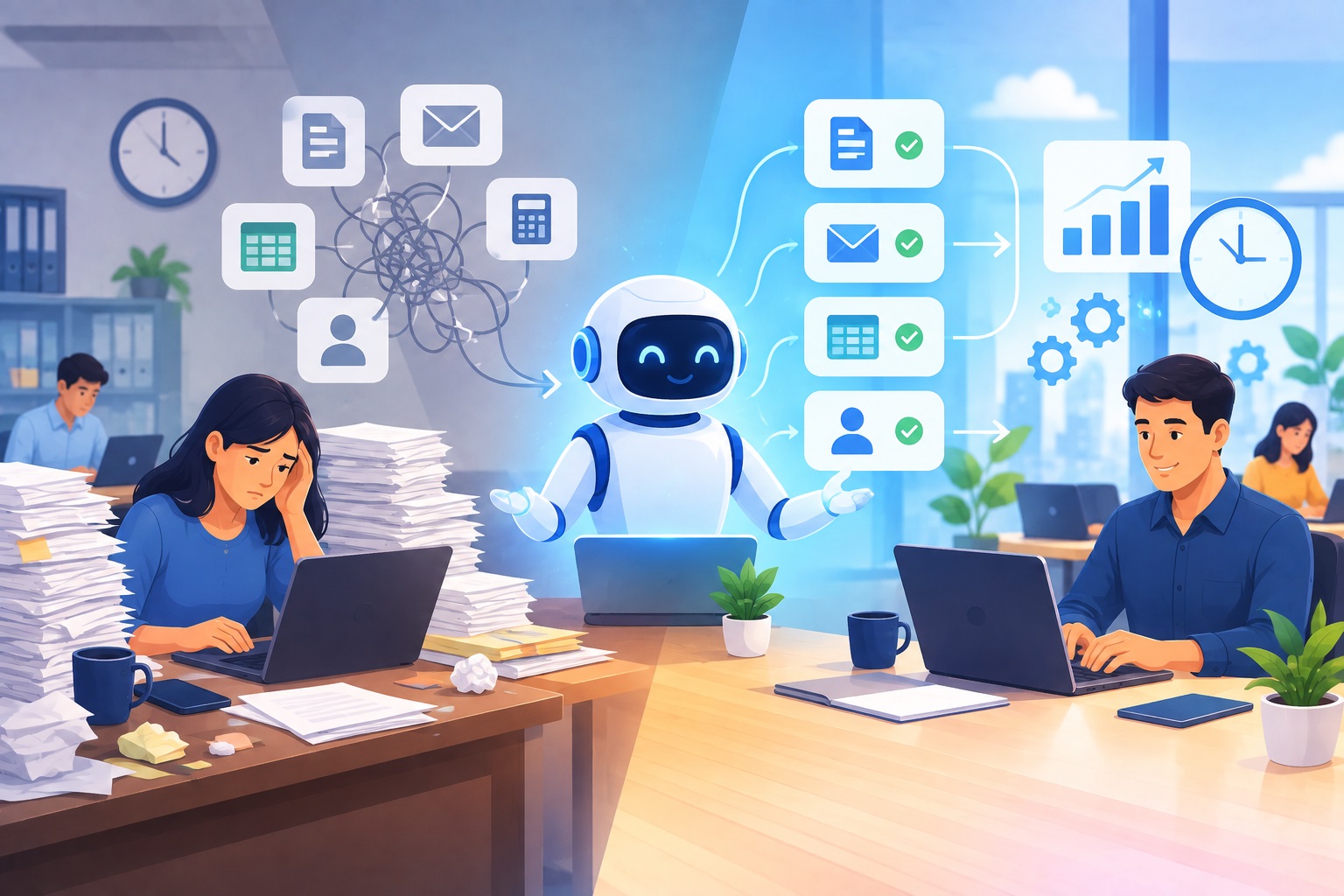
How Business Automation Tools Support Growth Without Adding Chaos
Automation only actually helps if it makes things simpler, not if it just becomes one more system nobody fully understands.
The good stuff handles the boring, repetitive work, data entry, report generation, routine, and customer emails. People can spend their time on things that actually need a human brain behind them.
Skip this step, and growth just means hiring more people to keep doing the same manual tasks by hand. It gets expensive fast and rarely fixes the actual bottleneck.
Business automation tools and AI software for business growth earn their keep here. They scale with the company instead of demanding a full rebuild every time a new department gets added.
Teams can roll out new automated workflows one at a time, test them, tweak what does not work, and keep everything else running without disruption. That incremental approach beats a rip-and-replace overhaul almost every time.
The Role Of Intelligent Workflow Software In Long-Term Growth
A workflow built for a twenty-person team rarely survives contact with two hundred employees spread across multiple offices.
Things that used to be simple- approvals, handoffs, reporting- start breaking down in ways nobody predicted.
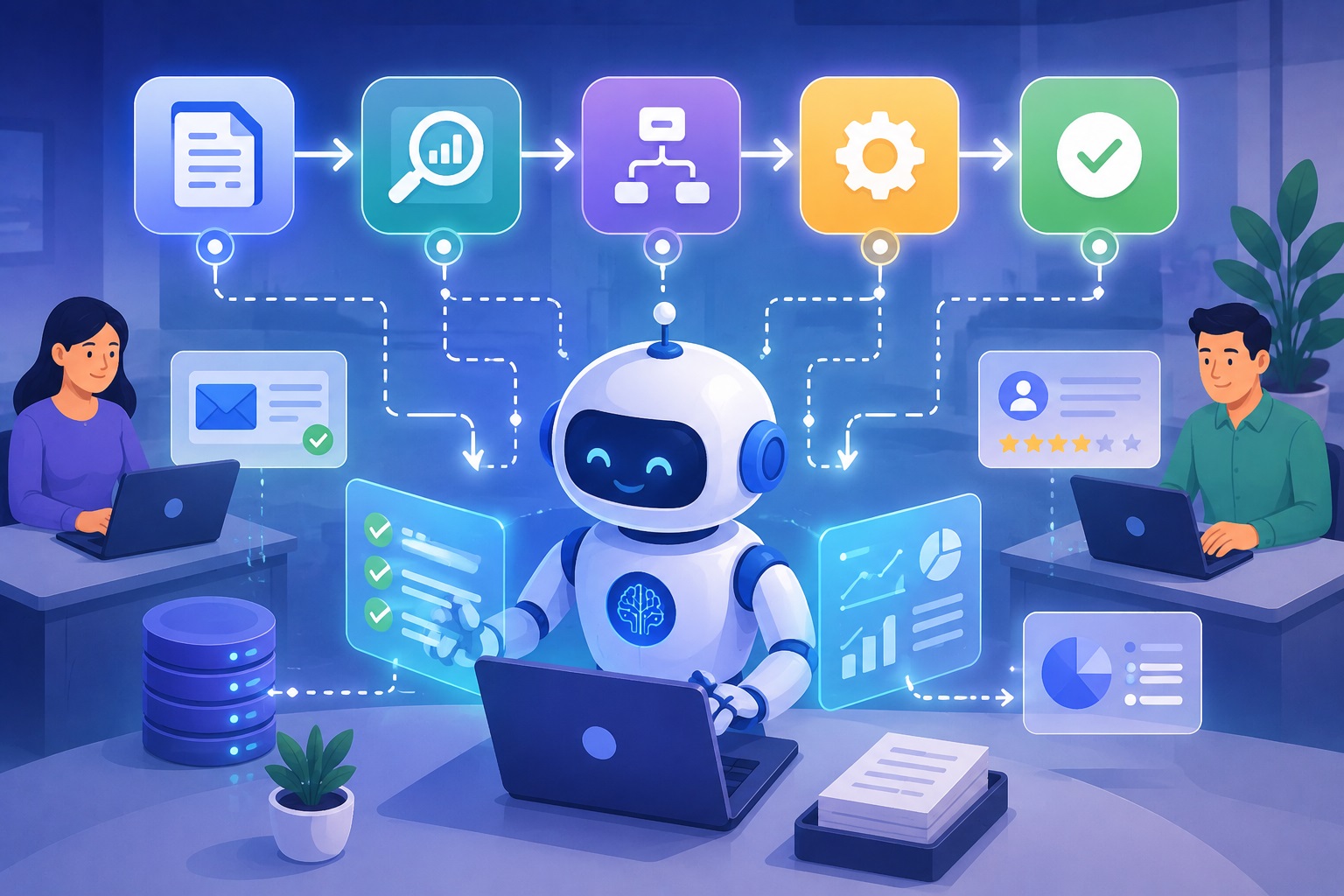
Intelligent workflow software handles this by learning from how people actually use it and adjusting on its own. It works well instead of forcing someone to redesign the whole system by hand every time complexity creeps in.
This flexibility matters most exactly when things get chaotic: a merger, a big product launch, headcount doubling after a funding round.
Companies that already invested in adaptable workflow tools tend to weather those moments without much drama. The ones still running on rigid systems built for a much smaller operation usually feel every bit of that growing pain.
Frequently Asked Questions
How can AI business platforms support a growing company?
Honestly, it comes down to taking work off people’s plates. AI platforms automate the repetitive stuff, scale up server capacity as data and user numbers grow, and adjust workflows without needing a full rebuild each time. That frees up the team to focus on strategy and actual relationships instead of grinding through manual tasks.
What should businesses look for in a scalable AI platform?
Cloud infrastructure that scales on its own, modular features you can add as needed, solid security and compliance options, and proof the platform has actually handled real growth before, not just a slick demo. Support quality matters more than people expect too, especially once things get complicated.
Can AI business platforms integrate with existing business software?
For the most part, yes. Most platforms built today connect with the tools companies already run: CRMs, accounting software, communication apps. Still, checking this before signing anything saves you from an ugly workaround six months down the line.
How does AI automation help businesses scale without adding unnecessary overhead?
It takes the rule-based, repetitive tasks off people’s hands, the stuff that would otherwise mean hiring just to keep up. That keeps costs tied more to actual growth rather than ballooning headcount every time workload increases.
Choosing The Right Platform For Where Your Company Is Headed
Growth rarely moves in a straight line, and whatever software runs your operations needs enough to handle wherever that growth actually takes you.
Syncrux was built with exactly that kind of flexibility in mind, so companies scale without the mess that usually comes from outgrowing their own tools. If your current setup is starting to creak under the weight of growth, it might be worth seeing what a platform built for scale actually looks like in practice.